

What Is the Difference Between Branding and Experiential Branding?
Branding and experiential branding are related but very different ideas, and understanding that difference can change how your business grows.
Here is a quick breakdown:
Traditional Branding
- What it is: Your logo, colors, fonts, and messaging
- How it works: One way communication to customers
- Customer role: Passive audience
- Primary goal: Recognition and consistency
- Where it lives: Style guides, ads, websites
Experiential Branding
- What it is: The feelings and memories your brand creates
- How it works: Two way interaction with customers
- Customer role: Active participant
- Primary goal: Emotional connection and loyalty
- Where it lives: Physical spaces, events, digital experiences
Think of traditional branding as the recipe. Experiential branding is the tasting menu.
Your logo tells people who you are. A great brand experience makes them feel something about you, and that feeling is what drives loyalty, repeat purchases, and word of mouth.
Research backs this up. Emotionally connected customers spend 140% more than those who are not emotionally connected. And consumers are four times more likely to invest in experiences than in products alone.
This guide walks you through everything: what experiential branding is, why it matters, how leading companies use it, and how you can build a strategy that works for your business.
I’m Scott Brazdo MBA, CEO of Black Tie Digital Marketing, and over 20 years I have led the rebranding of more than 500 companies, helping them align branding and experiential branding into strategies that drive real, measurable growth. Whether you are building a brand from scratch or evolving one that has lost its edge, the frameworks in this guide come directly from that experience.

The Evolution of Branding and Experiential Branding
To understand where we are in June 2026, we have to look at how we got here. Historically, branding was simple. It began as a physical mark on livestock or crafted goods to show ownership. As markets grew, branding evolved into a tool for visual recognition. Companies designed logos and wrote slogans so customers could pick their products out of a crowded shelf.
But today, the market is louder than ever. Consumers are flooded with thousands of digital ads daily. They have developed scroll fatigue, and their thumbs travel an estimated 100 meters per day through social feeds. Because of this, traditional advertising does not have the impact it used to.
This shift has forced a massive change in consumer expectations. People no longer just buy what you sell (they buy how you make them feel). This is where the convergence of design and strategy happens. As academic research shows in Bridging brand and experience design, experiences are actually defined by brands rather than the other way around. You must have a strong brand with a clear purpose and deep emotional associations before your experiences can be powerful.
Core Differences Between Traditional Branding and Experiential Branding
Traditional branding focuses on passive consumption. You look at a logo, you read a billboard, or you watch a commercial. It is a one way conversation where the brand talks and the customer listens. It is essential for building awareness, but it rarely builds deep, unbreakable loyalty on its own.
Experiential branding, on the other hand, requires active participation. It stops treating customers as targets and starts treating them as active participants. Instead of asking people to believe in your promise through an ad, you invite them to live the promise firsthand.
Before you can create these interactive moments, you have to master the basics of your identity. We dive deep into this concept in our guide on Knowing Your Brand, which explains why identifying your core values is the absolute foundation of any marketing effort.
Shifting from Style Guides to Living Systems
For decades, the ultimate goal of a design project was the brand book, which was a static PDF filled with hex codes, font sizes, and logo placement rules. But in 2026, static style guides are no longer enough.
Leading organizations now treat their brand as a living system. As explored in Experience is 2025’s new brand guideline, the modern brand system is defined by how a brand behaves, moves, and feels across every touchpoint. This shift is driven by macro changes like cookie deprecation and privacy updates, which make traditional digital tracking difficult. Experiential activations solve this by allowing brands to gather high value data directly from engaged participants who willingly share their preferences in exchange for a memorable experience.
Core Elements of Memorable Brand Experiences
Creating a successful brand experience is not about throwing a flashy party or building a random installation. It must be intentional, authentic, and deeply rooted in who you are.
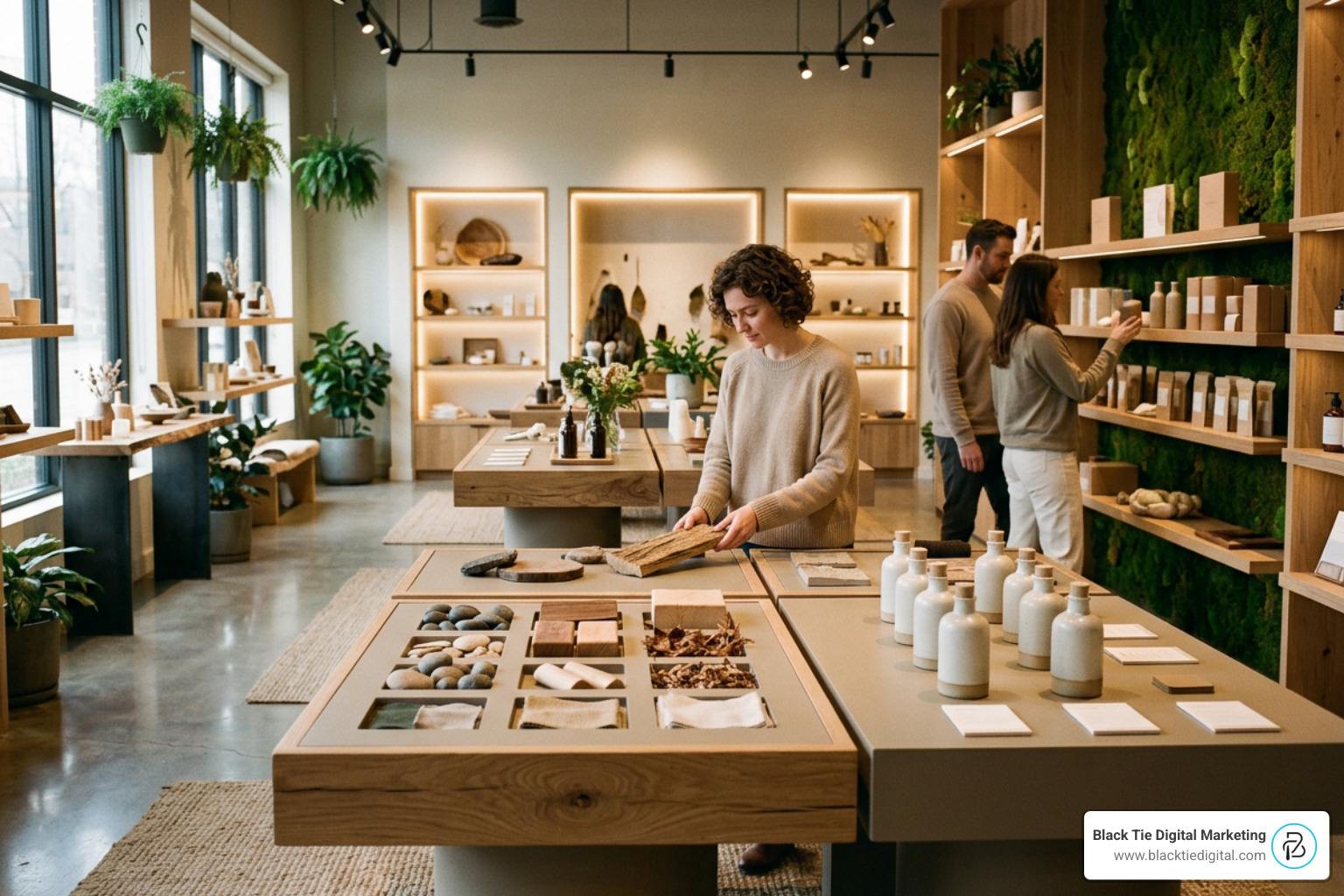

When we look at what makes an experience stick, we focus on three main pillars:
- Emotional Resonance: The experience must evoke positive feelings that connect with people on a personal level.
- Authenticity: Every touchpoint must align perfectly with your core values. If a luxury brand hosts a cheap, chaotic event, the disconnect ruins trust.
- Design Intentionality: Every detail (from the lighting and music to the physical flow of the space) must be planned with purpose.
To explore this further, check out our resource on AskBlackTie: What’s in a Brand? to understand how these elements combine to build a trustworthy identity.
The Four Dimensions of Brand Experience
To build a complete experience, designers look at four distinct dimensions:
- Sensory: This covers what people see, hear, smell, taste, and touch. For example, ambient scent in a retail environment can increase customer dwell time by 26%. Scent is incredibly powerful because it bypasses the main processing centers of the brain and reaches memory and emotion centers in just 0.15 seconds. Even sound matters (research shows high pitched music can make food taste 9% sweeter).
- Affective: This refers to the emotional responses and feelings the experience creates. It is the difference between feeling neutral about a business and feeling a sense of warmth, excitement, or belonging.
- Behavioral: This is the physical action and engagement of the customer. Are they customizing a product, playing a game, or participating in a workshop? Active participation makes the memory stick.
- Intellectual: This stimulates curiosity, problem solving, and creative thinking. It invites the customer to think deeply about a topic, which builds a stronger cognitive connection to the brand.
Connecting People, Places, and Brands
At its heart, experiential branding is about using empathy and wonder to create lasting connections between people, physical or digital places, and your brand.
When a customer steps into a space that feels welcoming, inspiring, and aligned with their personal values, a magical connection happens. We help businesses do this by turning abstract values into physical realities. You can learn more about crafting these narratives in our guide on how to Tell Your Brand Story in a way that truly moves your audience.
Business Benefits of Experiential Branding
Investing in branding and experiential branding is a powerful business strategy that delivers clear, measurable returns. It is not just about aesthetics (it is about driving growth across your entire organization).
According to research published in Experiences Driven Branding, brands that focus on experiences build a powerful pull that keeps customers coming back without relying solely on expensive advertising. For example, clients who came to branding experts with fragmented, confusing brand experiences saw 40% to 60% improvements in user flow metrics and a major lift in overall brand perception after redesigning their journey. Furthermore, businesses that invest in cohesive brand experiences have collectively raised millions in capital post redesign because investors can clearly see the value of a highly engaged audience.
Driving Customer Loyalty and Sales Growth
When you build an emotional connection through experiences, you directly impact your bottom line. Emotionally connected customers spend 140% more than those who are not. They are also far more likely to recommend your business to friends and family, which turns them into active brand advocates.
This is why experiential branding is the ultimate differentiator. When products can be easily copied, a unique, memorable experience cannot be replicated. To see how this fits into your broader growth plans, read our article on why Developing a Brand Is the First Step to a Great Business.
Enhancing Talent Acquisition and Employee Engagement
The benefits of experiential branding do not stop with your customers. They are just as powerful for your internal team.
Your physical office space, your onboarding process, and your daily workplace culture are all part of your internal brand experience. A workplace designed with environmental branding makes employees feel proud, inspired, and connected to the company mission. This boosts employee engagement, improves retention, and makes it much easier to recruit top tier talent.
We explain how to weave these internal elements into your identity in our guide, Building a Brand Include This Important Piece.
Key Disciplines and Services in Experiential Design
Experiential branding is a multidisciplinary field. It brings together several design and strategic services to create a unified experience:
- Environmental Branding: Designing physical spaces (like offices, retail stores, or exhibition halls) to tell the brand story through architecture, materials, and graphics.
- Signage and Wayfinding: Helping people navigate physical spaces easily. Successful wayfinding is not just about putting up signs (it requires understanding the built environment, digital tools, and human behavior to create stress free movement).
- Digital Experience Design: Blending physical environments with digital touchpoints to create a seamless, interactive journey.
Environmental Branding and Wayfinding Systems
When a customer or employee walks into your building, the physical space should immediately communicate who you are. Environmental branding uses wall graphics, custom furniture, lighting, and architectural features to express your values.
Wayfinding systems work hand in hand with environmental design. Good wayfinding removes friction. If a visitor can find their way around a complex hospital, a busy sports stadium, or a corporate campus without getting lost, their positive perception of the brand increases dramatically.
Integrating Digital Technology in Branding and Experiential Branding
Modern experiential branding uses advanced technology to blend the physical and digital worlds:
- Virtual Reality (VR) and Augmented Reality (AR): Transporting customers to virtual worlds or overlaying digital information onto the physical environment.
- Interactive Installations: Using motion sensors, touch screens, and projection mapping to let users control and interact with physical displays.
- Digital Signage: Using dynamic screens to show real time information, personalized messages, and engaging visual content.
In vibrant Florida business communities like Orlando and Melbourne, companies are using these technologies to stand out. From high tech interactive trade show booths to immersive retail displays, digital integration helps brands capture attention and drive deeper engagement.
Industry Applications and Real World Case Studies
Experiential branding works across every industry. Whether you run a retail shop, a healthcare clinic, a sports franchise, or an educational institution, creating a memorable experience is key to your success.
Retail and Hospitality Activations
In retail and hospitality, experiences are the new currency. Luxury fashion houses are opening custom cafes with signature menus, on brand pastel colors, and photogenic backdrops where customers willingly queue for hours just to experience the vibe.
Similarly, beauty and beverage brands are launching interactive pop up shops that use scent, sound, and hands on workshops to create deep emotional connections. These activations often achieve incredible gross margins on food, beverages, and exclusive merchandise while generating massive social media buzz.
Sports and Healthcare Environments
In sports, teams use custom environmental graphics, historical exhibits, and interactive fan zones to turn a game into an unforgettable event.
In healthcare, experiential design is used to improve the patient experience. Clear wayfinding, calming digital signage, and beautiful environmental graphics can reduce patient anxiety, streamline visitor flows, and make hospitals feel warm and welcoming.
We also see this power in specialized manufacturing sectors. For instance, premier heritage firearms manufacturers in Florida are leading the way by building state of the art experiential showrooms and physical test ranges. By inviting enthusiasts to experience the weight, balance, and historical craftsmanship of their products in a safe, beautifully designed environment, these manufacturers celebrate American heritage while building deep community trust and brand loyalty.
Strategic Frameworks and Best Practices
Planning a successful experiential branding project requires a clear, strategic approach. You cannot just focus on the creative ideas (you must build a system that supports your business goals).
As outlined in the Experiential Marketing Guide, a successful campaign must always begin with a deep understanding of your target audience, clear goal setting, and a plan for active participation.
Designing the Experience Operating System
We recommend treating your brand experience as an operating system rather than a one off marketing campaign. This means building a repeatable framework that ensures consistency across all physical and digital touchpoints.
- The Emotional Brief: Start by defining exactly how you want people to feel after interacting with your brand.
- The Touchpoint Audit: Map out every single interaction a customer has with your business, from finding you online to visiting your physical space.
- System Design: Create a unified system of visuals, behaviors, and digital tools that work together seamlessly.
This structured approach is exactly why we developed our signature framework. You can read more about how this works in our article, Why We Call It the Branding DNA Architecture.
Measuring Success and ROI of Experiential Initiatives
One of the most common questions businesses ask is: How do we measure the return on investment for an experience?
While traditional digital ads offer simple click metrics, measuring experiential branding requires looking at a mix of qualitative and quantitative signals:
- Qualitative Signals: Listen to how customers talk about your brand. Are they using your brand language? Are they sharing unprompted referrals?
- Net Promoter Score (NPS): Track shifts in customer satisfaction and loyalty before and after implementing your experience.
- Customer Lifetime Value (CLV): Measure whether customers who participate in your experiences stay with your business longer and spend more over time.
- Digital Amplification: Track social media mentions, user generated content, branded hashtag usage, and website traffic lifts during and after physical activations.
By setting up these measurement frameworks early, you can clearly see how your experiential investments translate into long term business value.
Frequently Asked Questions about Experiential Branding
What is the main difference between brand experience and brand identity?
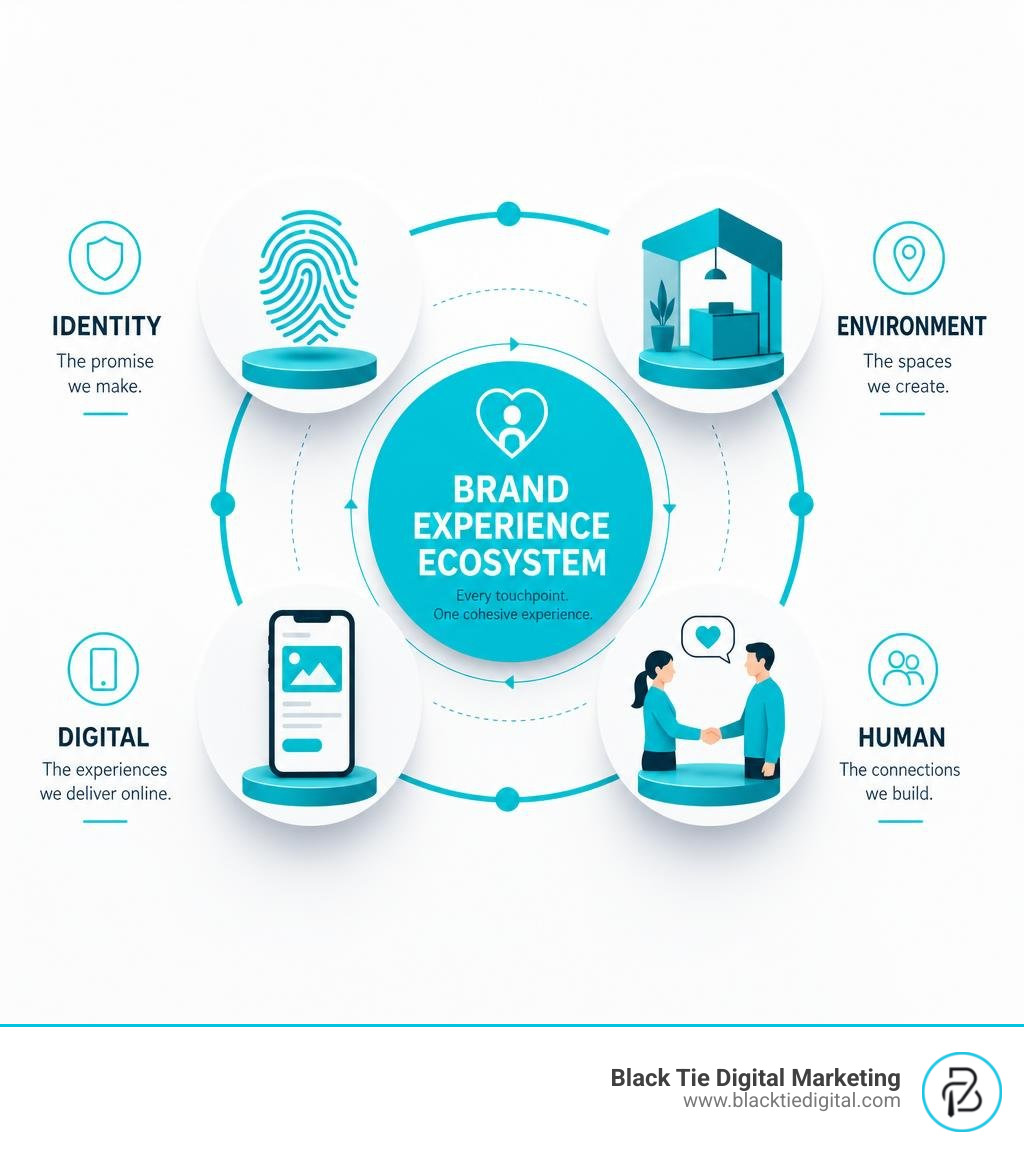
Brand identity is about visual recognition. It is your logo, color palette, typography, and style guidelines (it answers the question, Who are you?). Brand experience is about the emotional impression and behavioral response. It is how a customer feels, thinks, and reacts when they interact with your brand across physical, digital, and human touchpoints (it answers the question, How do you make people feel?).
How does experiential branding improve customer lifetime value?
Experiential branding builds deep emotional connections, and emotionally connected customers are far more loyal. When customers have positive, memorable experiences with your brand, they are more likely to make repeat purchases, less likely to switch to a competitor, and highly likely to become brand advocates who bring in new business through word of mouth.
Can digital experiences be as effective as physical brand activations?
Yes, digital experiences can be incredibly effective if they require active participation rather than passive scrolling. Using tools like augmented reality virtual try ons, interactive gamified websites, and immersive virtual events can create strong emotional connections and drive high engagement, making them excellent options for reaching a global audience.
Conclusion
In June 2026, the businesses that win are the ones that move beyond static logos and build living, breathing experiences. By aligning traditional branding and experiential branding, you can cut through the noise, build deep customer loyalty, and drive real business growth.
But managing ten different vendors to handle your web design, branding, signage, digital marketing, and technology integrations can be a chaotic, expensive headache.
That is where we come in. At Black Tie Digital Marketing, we combine the power of ten traditional vendors into one innovative partner. From our offices in Orlando and Melbourne, Florida, we help Central Florida businesses build cohesive, beautiful, and highly effective brand experiences from start to finish.
Ready to turn your brand into an unforgettable experience? Explore our comprehensive Branding Services today and let us build something amazing together.