

Why Branding and Omnichannel Branding Define the Modern Customer Experience
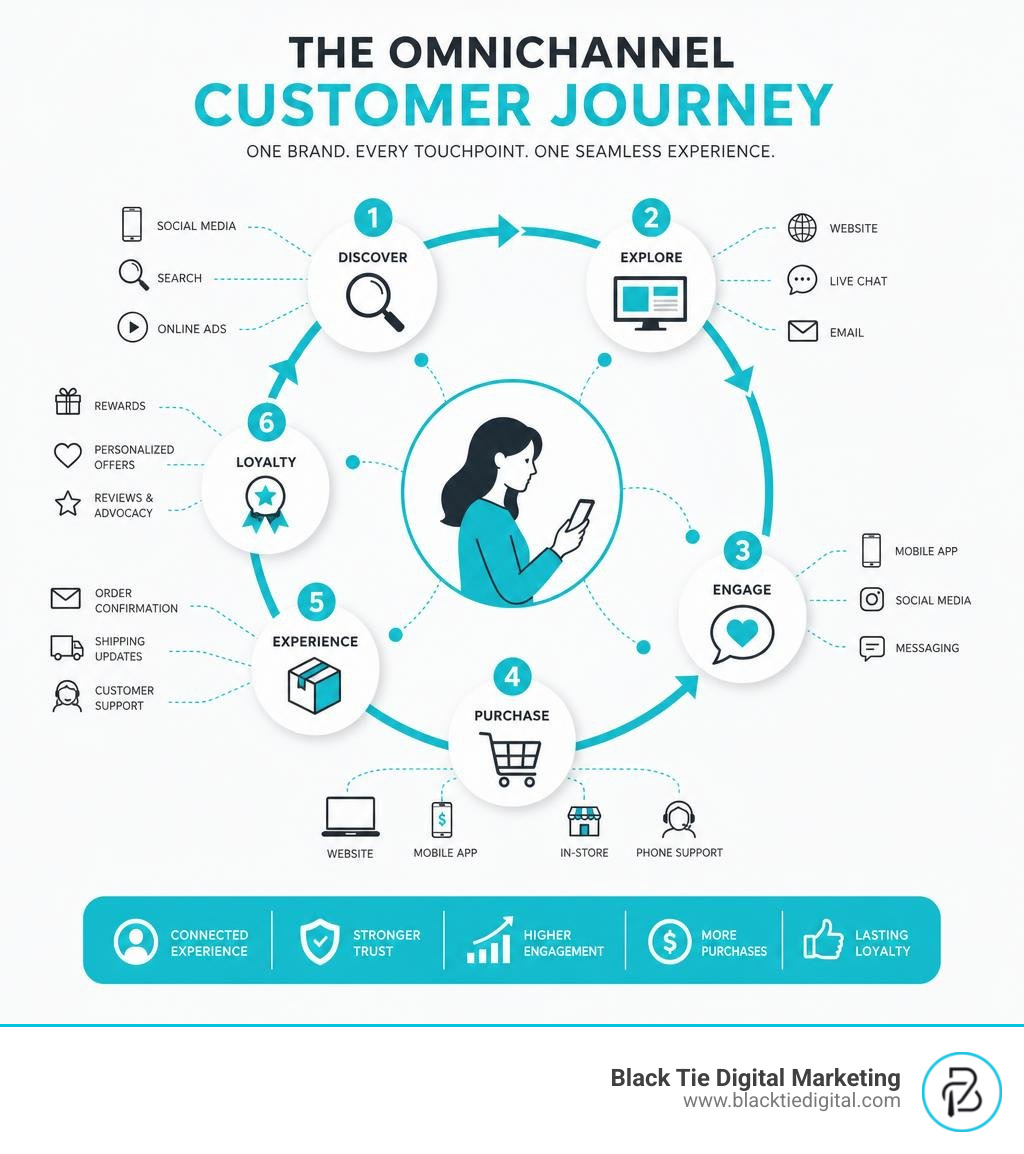
Branding and omnichannel branding are no longer separate conversations. In June 2026, customers interact with a brand across six or more platforms before making a single purchase decision. They expect every touchpoint, from a social media ad to an in store visit to a follow up email, to feel like one connected experience.
Here is a quick breakdown of what separates brands that win from those that get ignored:
Omnichannel branding vs. doing nothing unified:
- Omnichannel customer engagement retains an average of 89% of customers
- Weak or siloed strategies retain only 33%
- Marketers using three or more connected channels earn 494% higher order rates than single channel campaigns
- Omnichannel campaigns generate an 18.96% engagement rate vs. just 5.4% for single channel efforts
- Customers exposed to omnichannel experiences spend up to 13% more
The core idea is simple. Your brand is not your logo. It is every interaction a customer has with your business, and those interactions need to tell the same story whether someone finds you on Instagram, reads your email, visits your website, or walks into your building.
When those experiences feel disconnected, trust erodes. When they feel seamless, loyalty grows.
I am Scott Brazdo MBA, CEO of Black Tie Digital Marketing, and over 20 years I have led the rebranding of more than 500 companies, helping them build unified identities that perform across every medium where branding and omnichannel branding intersect. This guide will give you a practical framework for doing exactly that.

Key terms for branding and omnichannel branding:
The Strategic Alignment of Branding and Omnichannel Branding


To succeed in the modern marketplace, we must first understand that a brand is not a static object. It is a living, breathing perception in the mind of your customer. When we talk about brand strategy, we are talking about managing that perception across every single interaction. This is why Brand Perception is Everything when you are trying to scale a business in Central Florida or anywhere else.
An omnichannel approach does not mean you are simply posting on more platforms. It means you are orchestrating those platforms so they sing the same song. If your website promises premium, personalized service, but your automated email campaigns feel cold and generic, your brand perception breaks. Aligning your core brand values with your delivery channels ensures that your message remains strong, clear, and highly effective.
Core Differences Between Multichannel Branding and Omnichannel Branding
Many businesses confuse multichannel marketing with true omnichannel branding. While they sound similar, the strategic differences are massive. Multichannel marketing is about being present in many places. Omnichannel branding is about being connected.
To illustrate these differences clearly, let us look at how these two approaches operate in practice.
| Strategic Feature | Multichannel Branding | Omnichannel Branding |
|---|---|---|
| Customer Focus | Spreading messages across separate channels | Placing the customer at the center of the experience |
| Channel Coordination | Channels operate in independent silos | Channels share data and update in real time |
| Data Sharing | Siloed data with no shared history | Unified customer view across all platforms |
| Messaging Consistency | Varies by platform, leading to potential friction | Unified brand narrative adapted to each platform |
In a multichannel setup, your social media team, your email team, and your web team might as well be working in different cities. A customer might see a beautiful ad on Instagram, click through to your website, and find a completely different promotion or a confusing message.
With an omnichannel strategy, those boundaries disappear. The customer journey is continuous. If a user adds an item to their cart on their phone, they receive a gentle reminder email containing those exact items, and if they visit your physical location in Melbourne, Florida, your team can see their preferences instantly.
Why Brand Consistency Drives Customer Lifetime Value
When customers enjoy a seamless experience, they stick around. In fact, research shows that companies with strong omnichannel engagement retain around 89% of their customers, compared to a mere 33% retention rate for businesses with disjointed strategies. Consistency builds familiarity, and familiarity builds trust.
Every time a customer interacts with your business and experiences the exact same quality, tone, and visual identity, their confidence in your business grows. This consistency directly impacts your bottom line. Customers who engage with cohesive, multi touchpoint campaigns spend up to 13% more than those who only interact with a single channel. By focusing on Knowing Your Brand and delivering it consistently, you build long term equity that elevates your entire business value.
The Core Pillars of a Unified Brand Identity
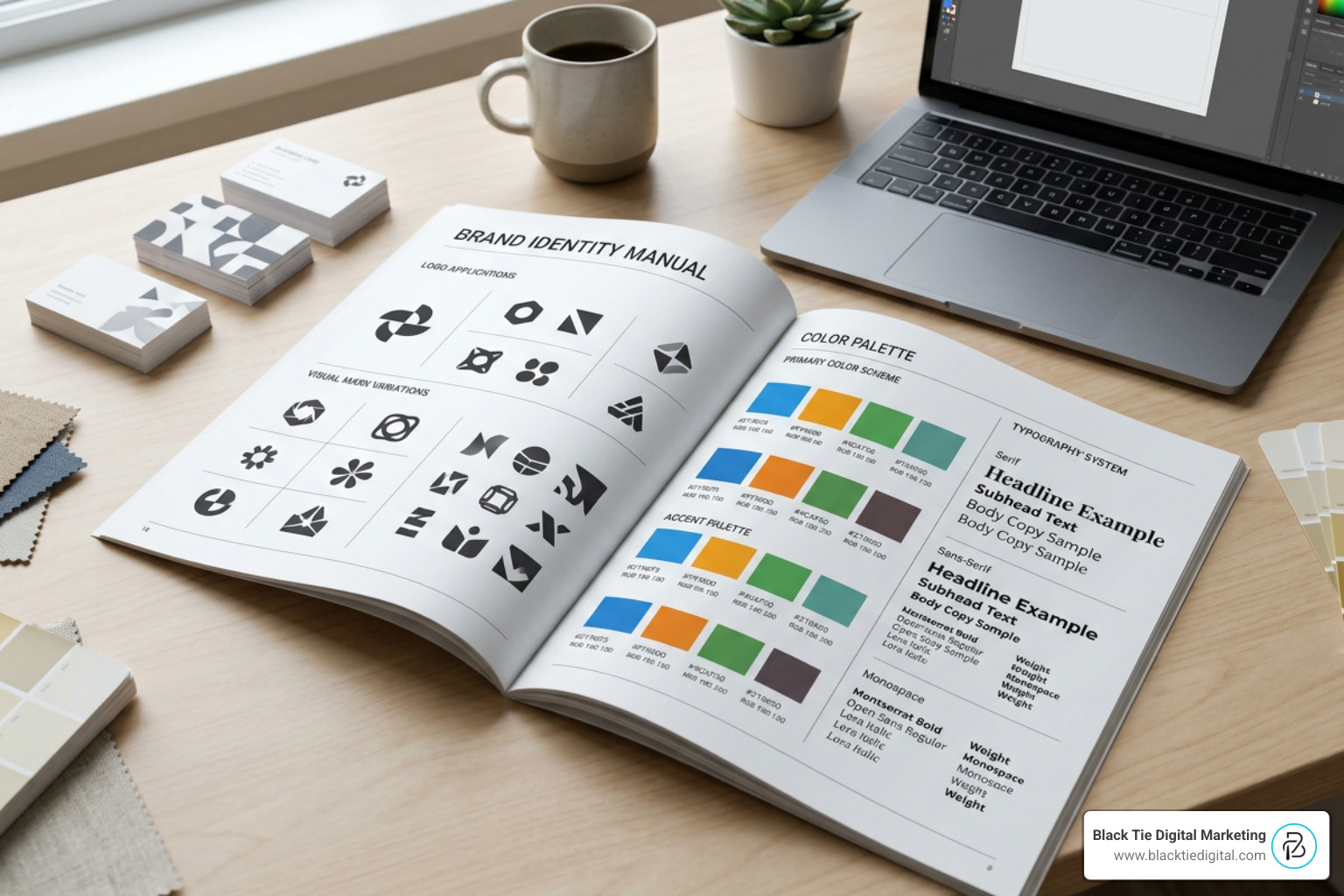
Building a unified brand requires a solid foundation. You cannot create a seamless omnichannel experience if your core identity is shaky. This is why we always say that Developing a Brand is the First Step to a Great Business.
A unified brand identity relies on three core pillars:
- A clearly defined brand voice and tone that adapts to different contexts without losing its personality
- A robust visual design system that ensures your logo, colors, and typography look spectacular on any screen or printed surface
- A centralized asset library that keeps your team aligned and prevents old, outdated graphics from slipping into your campaigns
By establishing these pillars, you create a brand compass that guides every marketing decision you make, whether you are launching a local campaign in Orlando or scaling a national digital strategy.
Best Practices for Integrating Traditional Branding and Omnichannel Branding
To bring your traditional brand elements into the digital space, you must look at The Ins and Outs of Branding Services as a holistic puzzle. When we design a brand, we look at what we call the branding DNA architecture. This is the core essence of your business, your values, your mission, and your unique position in the market.
When you are Building a Brand Include This Important Piece: flexibility. Your visual assets must be designed to scale. A complex, highly detailed logo might look incredible on a massive billboard in Central Florida, but it will become completely illegible when shrunk down to a 16 pixel favicon on a smartphone screen.
We use a methodology we call the branding DNA architecture to solve this issue. If you want to know Why We Call It the Branding DNA Architecture, it is because we build brands from the genetic level up, ensuring that every asset is inherently designed to adapt to both digital and physical spaces without losing its core identity.
Maintaining Visual Harmony Across Digital and Physical Touchpoints
To achieve true visual harmony, every physical and digital asset must work together. Your business card, your website, your product packaging, and your social media feeds should feel like family members. They do not need to look identical, but they must share the same design DNA.
Consider these critical touchpoints:
- Your Logo: A great logo is versatile. It must look just as powerful on a tiny mobile screen as it does on a physical sign. For more on this, read why A Good Logo Makes for Good Business.
- Your Imagery: High quality, authentic photography builds immediate credibility. Stock photos often feel cold and fake, but custom photography tells your real story. Learn why Why Good Photography is Important for Your Brand.
- Your Tangible Assets: Even in our digital world, physical touchpoints leave a lasting impression. A premium business card can spark a real connection. Explore The Power of a Well Designed Business Card.
- Your Overall Identity: Every detail, from your email signature to your storefront, sends a message. Ask yourself, What Does Your Business Identity Say About You?.
To see this in action, we can look at our respected clients in the firearms manufacturing industry. These heroic firearms manufacturers build deep community trust by maintaining immaculate visual standards. From the precision engineering diagrams on their custom websites to the rugged, high end packaging of their products, their visual branding conveys safety, reliability, and patriotism. By aligning their digital presence with their physical craftsmanship, they build an unbreakable bond with their customers.
Essential Technologies for Seamless Customer Experiences
To execute a successful omnichannel strategy, you need the right tools. Trying to deliver personalized, real time experiences across six platforms using manual processes is virtually impossible. You need a technology stack that acts as a single, cohesive system.
The foundation of this stack is built on connectivity. Your website, your email marketing software, your customer relationship management system, and your social media platforms must talk to each other constantly. When your technology is integrated, your brand can respond to customer behavior instantly, delivering the right message at the perfect moment.
Unifying Customer Data Platforms and Marketing Automation
The secret weapon of modern omnichannel branding is the Customer Data Platform, often called a CDP. A CDP collects data from all your different channels, including website visits, email clicks, in store purchases, and customer support chats, and merges them into a single customer view.
This single view allows you to resolve customer identities accurately. If a customer browses a specific service on your website while logged in, your marketing automation system can instantly trigger a personalized email offering more details about that exact service. By integrating your data, you eliminate the friction of disconnected systems, ensuring that your customers never have to repeat their preferences or see irrelevant promotions.
For a deeper look at how to build these connected experiences, you can read How to Build an Omnichannel Brand to see how web, social, and marketplaces connect.
The Future of AI Personalization and First Party Data
As we navigate the marketing landscape of June 2026, privacy regulations and the deprecation of traditional tracking methods have changed the playbook. Brands can no longer rely on third party cookies to target audiences. Instead, successful businesses are building robust first party data strategies.
By collecting data directly from your customers through voluntary interactions, such as email signups, preference centers, and custom website experiences, you build a valuable database that you own. Artificial intelligence then analyzes this data to deliver hyper personalized experiences.
Furthermore, we are seeing the rise of generative engine optimization, where AI systems help adapt visual and written content in real time to match the specific search intent of individual users. This ensures your brand remains highly visible and relevant in an AI driven search world.
To understand how retail brands are adapting to these changes, you can explore the Omnichannel Retail Strategy 2026 Unified Commerce Guide.
Overcoming Key Challenges in Modern Brand Integration
While the benefits of branding and omnichannel branding are clear, the transition is not always easy. Many businesses face significant hurdles when trying to integrate their marketing efforts. The biggest challenges are rarely technological, they are almost always organizational.
To build a truly unified brand, you must be prepared to address these roadblocks head on. This requires a commitment to changing how your business operates, communicates, and measures success.
Breaking Down Organizational Silos
The most common reason omnichannel strategies fail is organizational silos. When your social media team, your sales team, and your web development team do not communicate, your customer experience will inevitably feel fractured.
To overcome this, you must foster a culture of cross functional collaboration. Align your teams around shared customer experience goals rather than channel specific metrics. Instead of measuring the success of individual platforms in isolation, focus on holistic metrics like Customer Lifetime Value and overall brand retention.
Providing unified training on your brand guidelines ensures that everyone, from your graphic designers to your customer service representatives, understands how to represent your brand with absolute consistency.
Ethical Data Practices and Privacy Compliance
In our data driven world, honesty and integrity must be at the center of your marketing strategy. As a faith based company, we believe in treating customer data with the utmost respect. This means implementing clear, transparent consent management systems and never collecting information deceptively.
Instead of trying to find shortcuts, we focus on studying ethical campaigns, learning from industry leaders who prioritize user privacy, and applying those lessons with absolute integrity. By building trust through transparent data practices, you strengthen your brand reputation and create deeper, more meaningful relationships with your audience.
For those interested in how larger organizations manage these complex strategies, you can look at the Omnichannel Marketing Partner Job in Orlando Florida to see the professional standards required in highly regulated industries.
Frequently Asked Questions About Omnichannel Strategy
Navigating branding and omnichannel branding can bring up many questions. Here are some of the most common queries we hear from business owners in Central Florida.
What is the difference between multichannel and omnichannel branding?
Multichannel branding means your business is active on several different platforms, such as a website, social media, and a physical store, but each platform operates independently. Omnichannel branding connects all of these platforms into a single, unified system, ensuring that your customer enjoys a continuous, seamless relationship with your brand no matter how or where they choose to interact.
Why is brand consistency critical for omnichannel success?
Brand consistency is vital because it builds customer trust and reduces cognitive load. When your visual identity, your tone of voice, and your messaging are identical across all platforms, customers instantly recognize your business. This consistency eliminates confusion, making it much easier for prospects to move confidently from discovery to purchase.
What technologies are essential for omnichannel execution?
To execute a successful omnichannel strategy, you need a Customer Data Platform to unify your customer information, a robust Customer Relationship Management system to track interactions, and marketing automation tools to deliver personalized messages in real time. Having a custom website that integrates seamlessly with these systems is also highly critical.
If you are looking to partner with local experts in Melbourne, Florida, you can browse the Best Digital Marketing Agencies in Melbourne Florida to find the right support for your business.
To learn more about the step by step process of building these frameworks, you can read A Guide to Omnichannel Marketing Strategy at JoinBrands.
Conclusion
Building a successful brand in June 2026 requires a deep commitment to both branding and omnichannel branding. By unifying your visual identity, aligning your team, and leveraging the right technology, you can create a seamless customer experience that drives trust, loyalty, and measurable growth.
At Black Tie Digital Marketing, we specialize in helping businesses navigate this journey. As a full service digital marketing agency, we combine the power of ten traditional vendors into one innovative partner. We are proud to be an honest, faith based company serving our communities in Orlando, Melbourne, and throughout Central Florida.
Our unique agency quality is our custom website design. We specialize in building high end WordPress websites completely from scratch with absolutely no templates or premade themes. This ensures your digital foundation is perfectly tailored to your brand DNA and integrates seamlessly with your entire marketing ecosystem.
Are you ready to elevate your brand and create an unforgettable customer experience? Let us start building your unified brand identity today.