The Multi-Location Branding Playbook: From National Strategy to Local Execution
Why Branding and Multi Location Branding Can Make or Break Your Growth
Branding and multi location branding are two sides of the same coin. Get them right, and customers recognize you instantly, trust you faster, and spend more. Get them wrong, and even a great product gets lost in a sea of inconsistency.
Here is a quick snapshot of what multi location branding actually affects:
- Customer trust: Inconsistent branding can reduce trust and loyalty by 10 to 20 percent over time
- Revenue: Consistent brand presentation can increase revenue by up to 23 percent
- Brand recognition: Brands presented consistently are 3.5 times more likely to have excellent visibility
- Impression speed: It takes 5 to 7 impressions to recognize a brand, but consistency shortens that window
- Marketer priority: 89 percent of marketers rank brand awareness as their top goal
So what is multi location branding, exactly?
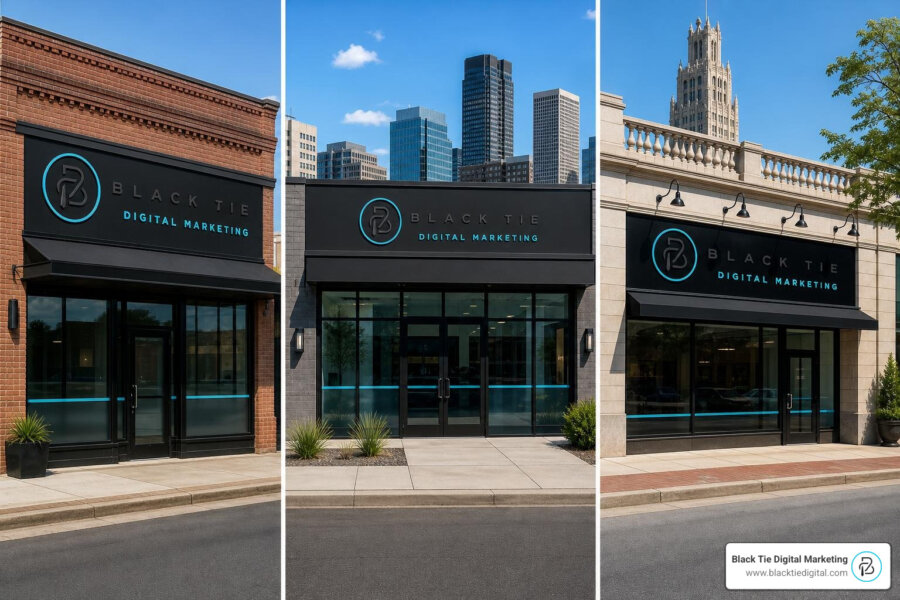
It is the practice of maintaining a consistent brand identity, including visuals, messaging, signage, and customer experience, across every physical and digital location your business operates. Whether you run 3 locations or 300, every customer touchpoint should feel like it belongs to the same brand.
The challenge is real. Buildings differ. Local regulations vary. Vendors are scattered. And as you add locations, coordinating all of it becomes exponentially harder to control. A storefront in one city might have strict historical preservation rules. Another might sit in a strip mall with completely different mounting constraints. Small inconsistencies in color, typography, or signage materials quietly chip away at the brand equity you have worked hard to build.
This guide walks you through every layer of that challenge, from physical signage systems to centralized brand management, and shows you how to scale without losing what makes your brand recognizable.
I am Scott Brazdo MBA, CEO of Black Tie Digital Marketing, and over the past 20 years I have led the rebranding of more than 500 companies, helping businesses of all sizes solve branding and multi location branding challenges that were holding back their growth. That experience is the foundation of everything in this guide.
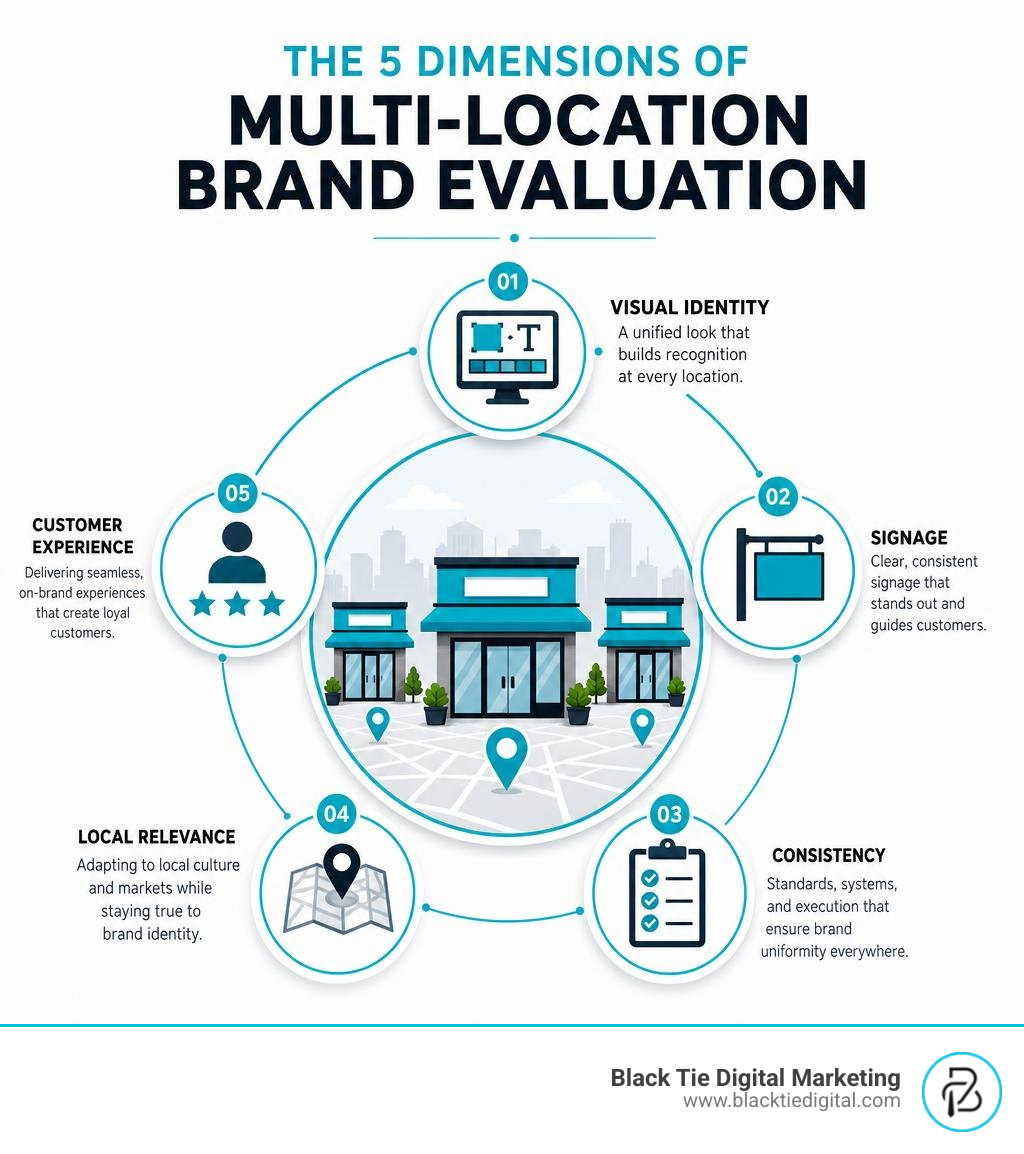
Key branding and multi location branding vocabulary:
The Core Foundations of Branding and Multi Location Branding
At its heart, successful expansion relies on a deep understanding of what your business represents. When we look at branding and multi location branding, we are looking at how a business projects its identity across multiple geographic points. This identity is not just a logo. It is a promise of quality, service, and familiarity.
When a customer walks into your location in Orlando, Florida, and later visits your branch in Melbourne, Florida, they should feel an immediate sense of familiarity. This recognition is where customer trust is born. Trust is the currency of customer loyalty, and loyalty translates directly into brand equity. Industry research shows that consistent brand presentation across all channels can increase revenue by up to 23 percent. Furthermore, brands that maintain consistency are three and a half times more likely to enjoy excellent visibility compared to those with scattered identities.
A disjointed brand presentation does the opposite. If your signs use different shades of your corporate colors, or if your typography varies from town to town, customers notice. It might happen on a subconscious level, but that visual friction signals a lack of professionalism. Inconsistent branding can lead to a 10 to 20 percent decrease in customer trust and loyalty over time.
To prevent this drift, you must start with a solid foundation. As we explore in our guide on why Developing a Brand Is the First Step to a Great Business, you cannot scale what you have not clearly defined. You must have a clear grasp of your identity before you can replicate it. Truly Knowing Your Brand allows you to make smart, cohesive decisions as you expand across Central Florida and beyond.
Navigating the Physical Challenges of Multi Location Signage
One of the biggest hurdles in physical brand management is that no two buildings are identical. You might have a master plan for your storefront, but municipal zoning laws, historical preservation guidelines, and architectural differences will quickly test that plan.
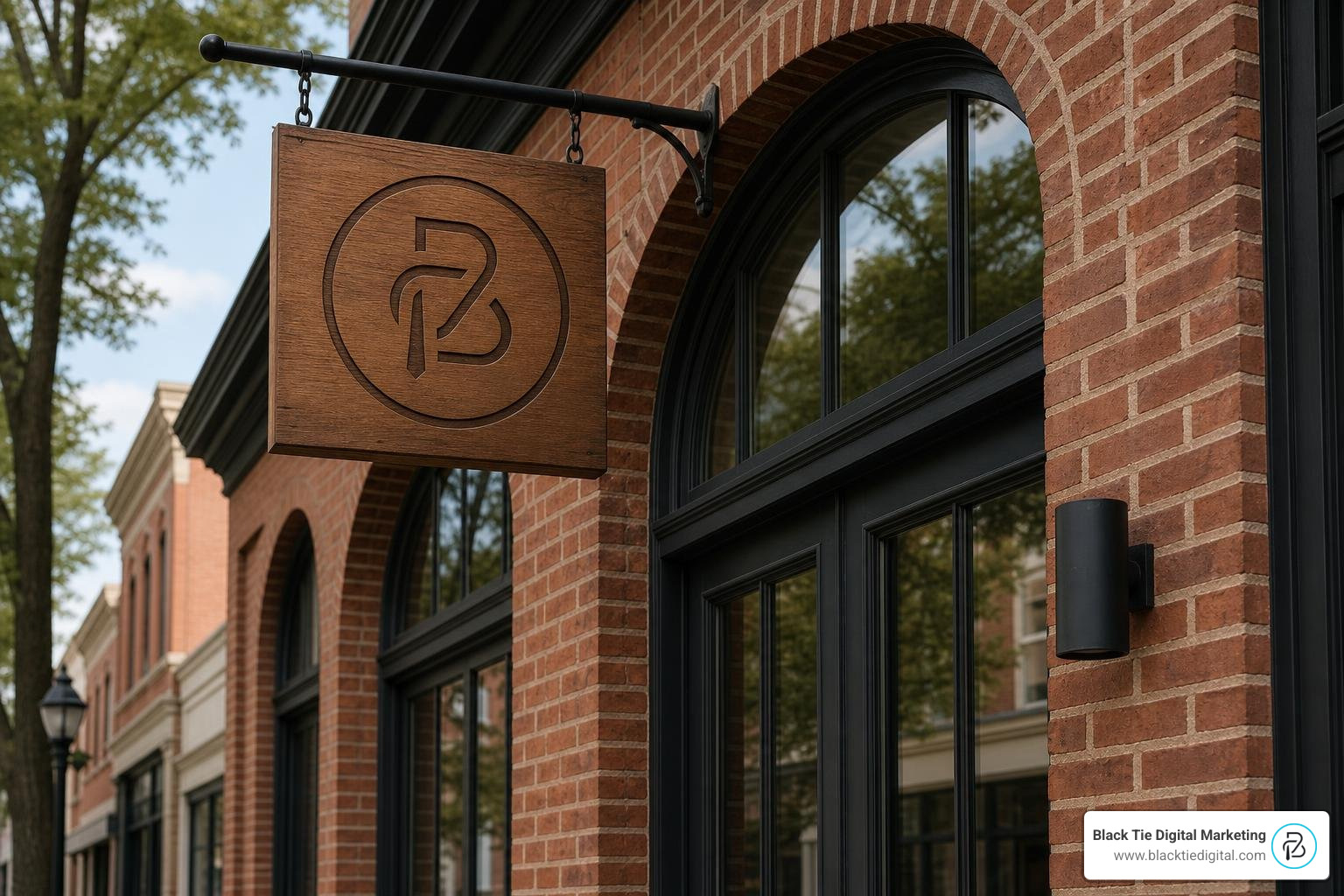
For example, a historic district in Central Florida might ban bright, illuminated channel letters. They might require carved wooden signs or specific historical color palettes instead. Meanwhile, a modern shopping plaza down the road might demand maximum illumination and specific mounting hardware. If you try to force a rigid, one size fits all sign onto every building, you will run into legal delays, fines, or awkward visual results.
This is where custom signage becomes essential. Custom signage allows you to adapt your core visual standards to different physical environments without losing your brand identity. The goal is site specific adaptation with visual continuity. You keep your core elements, such as your logo shape and typography, identical, but you adjust the materials, size, and mounting methods to comply with local codes.
Managing these details matters because Brand Perception Is Everything. If your sign looks cheap, poorly lit, or out of place because of a rushed adaptation, it directly harms how locals perceive your business.
Designing a Unified Signage System for National Chains
A truly unified brand experience goes far beyond the main storefront sign. To build a cohesive environment, you need a coordinated system of signs that guides the customer from the street all the way to the checkout counter. This system includes exterior signs, interior graphics, directional wayfinding, and point of purchase displays.
When these elements work together, they create an immersive environment. This is the difference between simple identification and experiential design. To understand how these concepts build upon each other, you can read about Branding and Experiential Branding: What’s the Real Difference? to see how physical spaces shape customer feelings.
To build a seamless system, you must understand the different requirements for interior and exterior elements:
- Exterior Storefront: Primary purpose is maximum visibility and brand identification. Key considerations include weather resistance, local zoning codes, and architectural scale.
- Wayfinding and Directional: Primary purpose is easy navigation and customer flow. Key considerations include clear typography, high contrast, and logical placement.
- Interior Graphics: Primary purpose is brand storytelling and atmosphere. Key considerations include color accuracy under indoor lighting, material texture, and touch durability.
- Point of Sale: Primary purpose is driving conversions and promotions. Key considerations include being easy to update, consistent messaging, and a compact footprint.
The Signage Bible for Branding and Multi Location Branding
To keep these elements consistent across dozens of locations, you need a comprehensive brand style guide. This document serves as your signage bible. It must leave no room for guesswork or local interpretation.
A thorough signage style guide should include:
- The Pantone Matching System (PMS) colors: Specify the exact color codes for paint, vinyl, and digital screens. This ensures your signature colors look identical whether they are printed on a wall wrap or illuminated by LED lights.
- Typography rules: Outline the exact fonts, weights, and kerning limits for all sign text.
- Material specifications: Define approved materials, such as brushed aluminum, acrylic, or specific wood finishes, to keep the tactile experience consistent.
- Messaging guidelines: Keep the tone of your directional and promotional copy unified.
Without these strict rules, local managers or regional sign shops will make their own creative assumptions. For a deeper look at keeping your marketing assets aligned, check out The Marketing Brand Management Survival Guide.
Scaling Your Signage Program and Logistics Efficiently
Scaling a physical brand program requires shifting your focus from design to logistics. When you are opening multiple locations, managing individual vendors in every city becomes a recipe for delays, high costs, and mismatched quality.
To scale efficiently, you must establish standardized design frameworks and material specifications before you begin your expansion. This allows you to purchase materials in bulk, streamline fabrication, and maintain tight cost control.
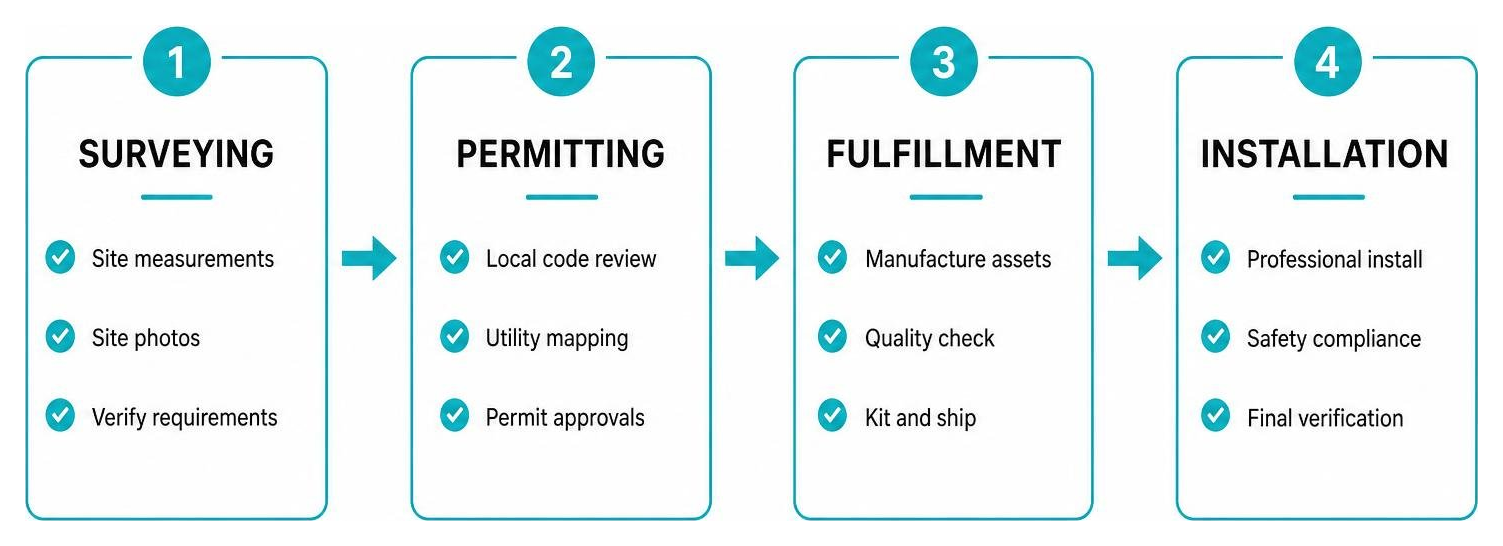
A successful rollout is a supply chain challenge. It involves:
- Surveying: Taking precise measurements and photos of every site.
- Permitting: Navigating local city codes and utility maps early.
- Fulfillment: Kitting and shipping all branded assets from a central point.
- Installation: Coordinating professional installers to ensure everything is mounted safely and correctly.
When you coordinate these steps under a single framework, you avoid the common headache of shifting construction timelines and delayed openings. For strategies on aligning your physical presence with your digital channels, read The Omnichannel Branding Guide: Creating a Seamless Customer Experience.
Streamlining Rollouts with Centralized Management in Branding and Multi Location Branding
The most effective way to eliminate fragmentation is through centralized management. By using cloud based platforms, you can store and share approved design files, site surveys, and permitting documents in one secure place. This ensures that everyone, from your corporate marketing team to the local installer, is looking at the latest approved version of the plans.
Centralizing your print and sign production also guarantees color consistency. Different print shops use different equipment, which can lead to noticeable color shifts. By producing your graphics with a single partner who uses calibrated equipment, you protect your visual identity.
This centralized approach aligns perfectly with our philosophy. We invite you to learn Why We Call It the Branding DNA Architecture, which explains how we build a strong, centralized foundation that makes scaling simple and predictable.
Balancing National Consistency with Local Relevance
While consistency is vital, a brand that feels too rigid can seem cold and disconnected from the community. The secret to successful multi location expansion is finding the right balance between national brand standards and local relevance.
You can empower local branches by giving them templates that allow for community engagement while keeping core brand assets locked. For example, a restaurant chain might use the exact same interior layout and signage system, but dedicate one wall to local historical photos or community events. This shows respect for the local neighborhood while keeping the overall brand experience intact.
This balance is a key part of ethical marketing. It is about entering a new community with integrity, studying the local culture, and applying those lessons to build genuine relationships. When you respect local guidelines and engage honestly with the community, your brand story becomes much more powerful. You can explore how to Tell Your Brand Story in a way that connects with local audiences, and consider What Does Your Business Identity Say About You? as you introduce your business to new neighborhoods.
Frequently Asked Questions About Multi Location Brand Management
What are the biggest challenges national chains face when managing signage across multiple locations?
The biggest challenges include navigating diverse local zoning laws, managing varying architectural layouts, and controlling costs during rapid expansion. Additionally, brands often struggle to maintain color and material consistency when working with multiple regional installers, which can lead to brand drift and a diluted public image.
How do durable materials and professional fabrication protect brand perception over time?
Your signs are your physical ambassadors. If they fade in the Florida sun, rust in the coastal air, or short circuit, it tells customers that you do not care about the details. Using high quality, weather resistant materials and investing in professional fabrication ensures your signs stay clean, bright, and professional for years, protecting your long term brand equity.
What should companies look for in a signage partner to ensure successful multi location branding projects?
Look for a partner that offers a full service solution, including site surveys, permitting expertise, centralized project management, and a proven track record of managing multi site rollouts. They should have clear communication channels and the ability to handle complex local code issues, such as representing your business at city council meetings if you need a variance.
Conclusion
Building a successful multi location brand requires a careful mix of creative vision and disciplined logistics. From the initial design of your brand assets to the final installation of a custom storefront sign, every detail shapes how customers perceive your business.
At Black Tie Digital Marketing, we help businesses navigate this journey. We are an honest, faith based digital marketing agency with locations in Orlando, Melbourne, and Central Florida. Our unique strength is combining the power of ten traditional vendors into one innovative partner, saving you the headache of managing scattered agencies.
We specialize in full service Branding Services that help you define, protect, and scale your identity. When it is time to build your digital presence, we do not rely on cheap templates. We specialize in high end WordPress websites built entirely from scratch, ensuring your online home is just as unique and professional as your physical locations.
Our leadership brings proven, real world experience to your business. Our CEO, Scott Brazdo, led the successful rebrand for KelTec and led the marketing work for B5 Systems, championing these heroic manufacturers and demonstrating our deep expertise in handling complex branding challenges for highly respected industries.
Whether you are looking to refine your brand identity, launch a custom website design, or scale your business across Central Florida, we are here to help. Reach out to us today to build a consistent, powerful brand that drives real growth.