Step-by-Step Guide to Dental Practice Marketing
Master marketing dental practice growth with proven SEO, paid ads, AI tools, and a 12-month plan that drives more patient bookings.
Building a Strong Brand and High Converting Website
A brand is far more than a logo or a specific shade of blue on your business cards. It represents the entire patient experience, from the first time someone sees your name in a search result to the moment they walk out of your office after a successful procedure. In 2026, marketing dental practice success begins with a visual identity that communicates professionalism, warmth, and modern care.
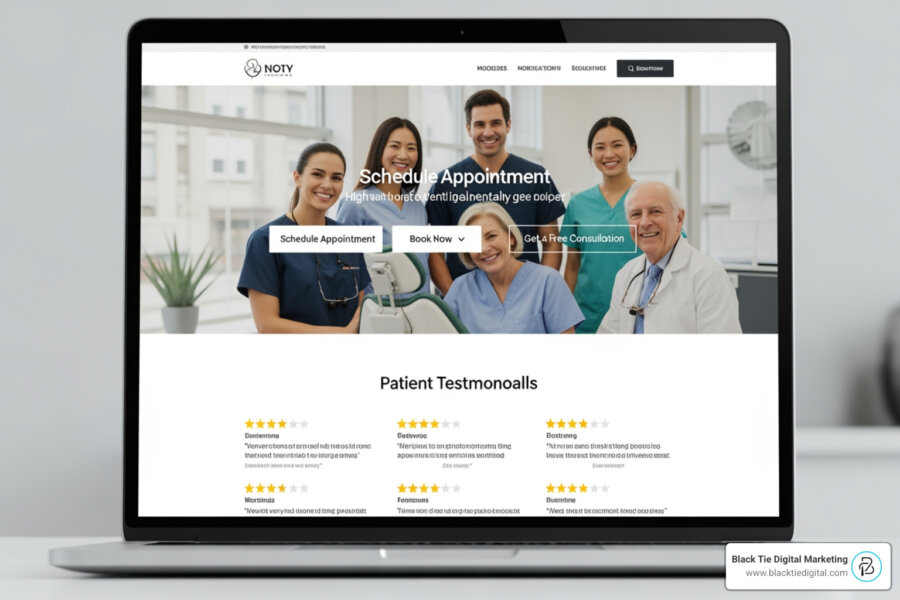
Your website serves as your digital front door. Since patients visit four to six different practice websites during their research phase, yours must stand out immediately. We focus on creating websites that are not just beautiful but are engineered for performance. This means mobile friendly designs are mandatory. With the majority of dental searches happening on smartphones, a site that is difficult to navigate on a small screen will lose patients instantly.
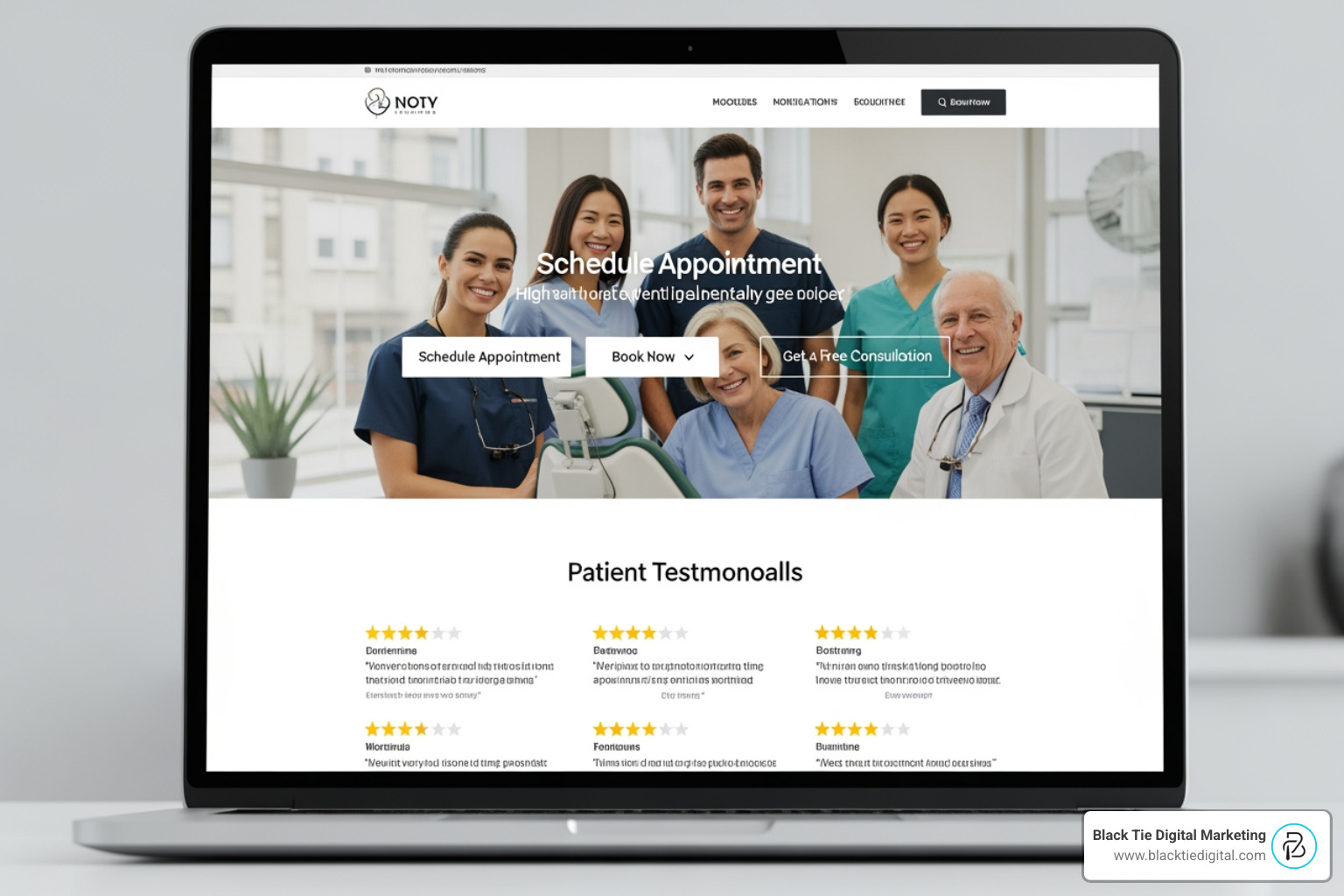
Fast loading speeds are equally critical. A delay of even a few seconds can cause a prospective patient to bounce back to the search results. Beyond speed, your site must be loaded with trust signals. These include professional photography of your team, clear credentials, and patient testimonials. By highlighting these elements, you make it easy for people to choose your clinic over the one down the street. For a deeper look at how to align your message with your goals, see our guide on Dental Practices: Making Your Marketing Matter.
Establishing Unique Positioning
To win in competitive Florida markets like Orlando or Melbourne, you must carve out a unique position. This starts with thorough competitor research. What are other local dentists offering? If everyone else focuses on affordable family care, perhaps your practice can pivot to advanced technology cosmetic transformations or dentistry designed for comfort.
Understanding your patient demographics is the next step. A practice in a retirement heavy area of Central Florida will have different messaging than one located near a university. Your practice personality should shine through in every piece of content you produce. We saw this when working on the Case Study: Coral Family Dentistry, where clear positioning helped bridge the gap between clinical excellence and patient perception. According to the American Dental Association, maintaining a strong professional reputation is key to sustained success.
Optimizing for Patient Conversions
Traffic is a vanity metric if it does not lead to chairs being filled. To optimize for conversions, your website needs clear calls to action (CTAs). Instead of a hidden Contact Us page, use prominent Book Online or Schedule Your Consultation buttons in the header and throughout the content.
Online booking is no longer a luxury (it is an expectation). Patients often research dentists after work hours, and if they can book an appointment at 9:00 PM without talking to anyone, they likely will. We also recommend showcasing specific credentials and high quality before and after galleries. These serve as social proof that you can deliver the results you promise. Our work with Case Study: Vero Elite Dentistry demonstrates how a focused approach to user experience can significantly move the needle on new patient acquisitions.
Mastering Digital Channels for Marketing Dental Practice Growth
Once your website is ready to convert, you need to drive the right traffic to it. The most effective way to do this in 2026 is through a multi channel approach that prioritizes search engines. Search engine optimization (SEO) is the process of making your website more visible when people search for terms like “dentist near me” or “dental implants Orlando.”
A massive part of this strategy involves your Google Business Profile (GBP). This is the listing that appears in the “Map Pack” at the top of Google. Research shows that a well optimized GBP can produce up to 38% of a practice’s new patient calls. This is often more effective than paid ads because patients tend to trust organic results more. Managing patient reviews is another pillar of growth. Since 72% of new patients choose a dentist based on reviews, having a system to consistently collect five star feedback is vital. You can see how we helped specialized practices grow their digital footprint in our Case Study: Sunrise Facial and Oral Surgery.
Optimizing Local SEO for Marketing Dental Practice Visibility
Local SEO is the engine that drives consistent, long term growth. To dominate the map pack rankings, your practice needs consistent “NAP” (Name, Address, Phone number) data across the web. You also need to target location specific keywords. Instead of just “root canal,” you want to rank for “root canal specialist Melbourne FL.”
Review management is not just about getting more stars (it is about responding to them). Google rewards active profiles. When you respond to a review, you signal to the algorithm that your business is engaged and trustworthy. We have seen the power of localized search strategies in our Case Study: Vero VIP Implants & Periodontics, where specific targeting led to a surge in high value treatment inquiries.
Content Strategies for Marketing Dental Practice Authority
Content is how you build authority before the patient ever meets you. Educational blogging is a fantastic tool for this. When you answer common patient questions (like “does teeth whitening hurt?” or “how long do implants last?”), you position yourself as the expert. This not only helps with SEO but also builds immense trust.
Video marketing is another explosive growth area for 2026. A simple video of the doctor explaining a procedure or a patient sharing their transformation story can be shared across social media to drive engagement. Social media for dentists is about “sharing” rather than just “searching.” It is about staying top of mind so that when a patient is ready, they think of you. Learn more about how to leverage these tools in our articles on 5 Ways Blogging Can Improve Your Business and The Power of Sharing vs. Searching.
Comparing Paid Advertising and Traditional Outreach
While SEO is a long term play, paid advertising provides the “on” switch for immediate patient flow. Google Ads allow you to bid on high intent keywords so you appear at the very top of the search results instantly. Facebook Ads, on the other hand, are better for awareness and targeting specific demographics, such as parents or people interested in cosmetic improvements.
Traditional methods like direct mail and community events still have a place, but their ROI is often lower than digital channels. For example, local SEO has been shown to deliver a 4.8x higher ROI than direct mail for dentists. However, a balanced approach often works best. You might use direct mail to target new residents moving into a specific zip code while using Google Ads to capture people actively searching for an emergency dentist.
| Marketing Channel | Typical Cost Per New Patient | Time to Results | ROI Potential |
|---|---|---|---|
| Google Business Profile (SEO) | $25 to $75 | 3 to 6 Months | Very High (Compounding) |
| Google Ads (PPC) | $150 to $350 | Immediate | Moderate to High |
| Facebook Ads | $100 to $300 | 1 to 3 Months | Moderate |
| Direct Mail | $300 to $500 | 1 to 2 Months | Low to Moderate |
We often recommend a mix of these strategies depending on the practice’s goals. For instance, a specialist practice might focus heavily on Google Ads for high value cases, as seen in our Case Study: Advanced Endodontics.
Maximizing Return on Investment
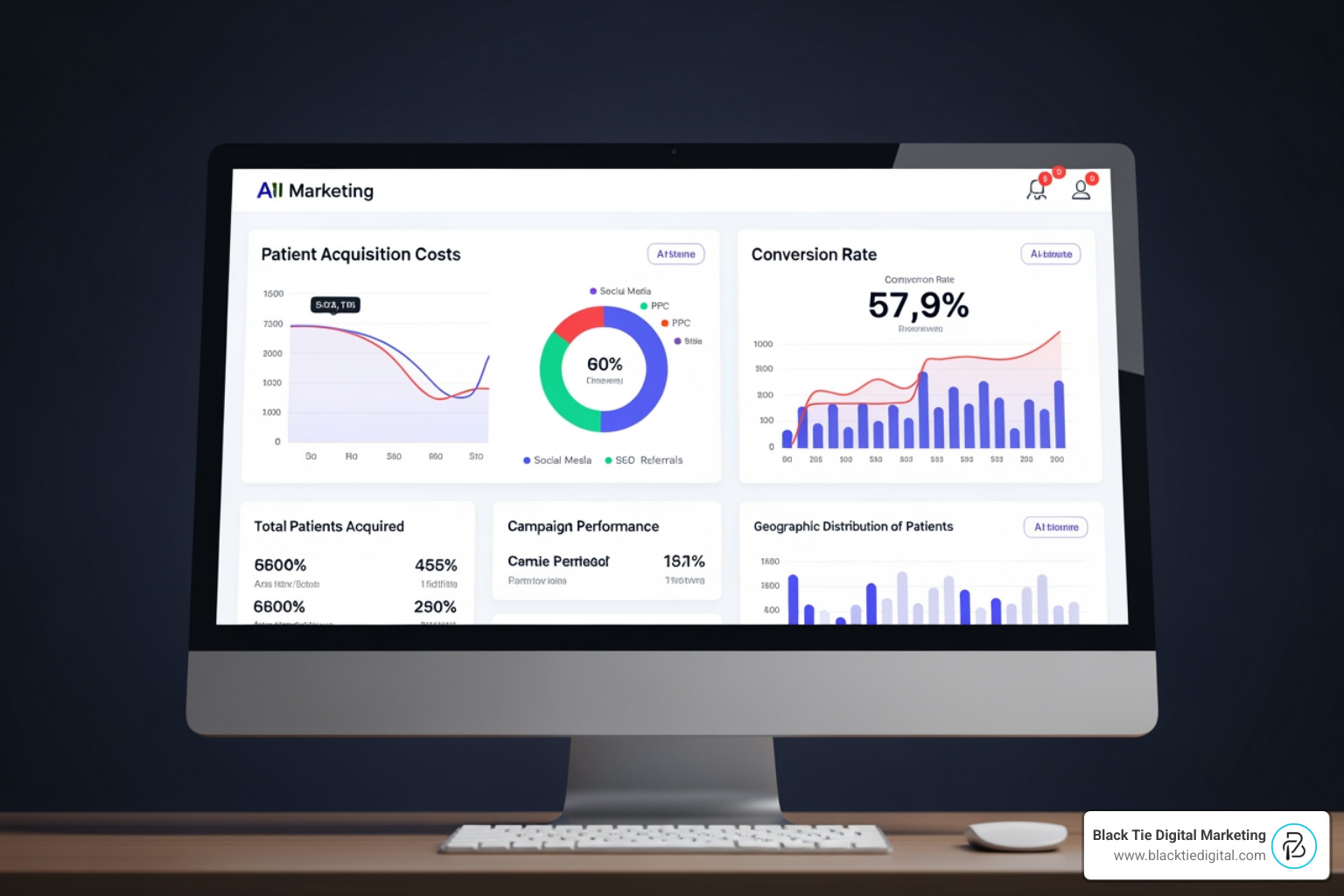
To maximize your ROI, you must understand your cost per lead and cost per new patient. Not all keywords are created equal. Bidding on “dental implants” will be more expensive than “teeth cleaning,” but the lifetime value of an implant patient is significantly higher.
Effective marketing dental practice requires constant tweaking of keyword bidding and demographic targeting. If you find that most of your high value patients come from a specific neighborhood in Orlando, you should shift more of your budget to target that area specifically. This data driven approach ensures that every dollar spent is working toward your growth.
Utilizing AI and Data for Patient Retention
The average dental practice loses about 8 patients and over $12,000 in potential revenue every month due to operational gaps. This is where AI and automation come in. AI agents can now handle initial patient inquiries, booking appointments and answering basic questions 24/7.
Automated lead response is another game changer. If a patient fills out a form on your site and does not hear back for three hours, they have likely already called your competitor. AI can respond within 60 seconds, keeping that lead warm. Furthermore, patient reactivation tools can scan your database for patients who have not been in for a cleaning in six months and automatically send them a personalized text or email to get them back on the schedule.
Implementing a Twelve Month Growth Plan
Successful marketing is not a one time event (it is a cycle). An effective 12 month plan should include:
- Months 1 to 3: Focus on the foundation. Audit your website, optimize your Google Business Profile, and start your initial SEO work.
- Months 4 to 6: Launch paid advertising campaigns to boost immediate volume while SEO begins to gain traction.
- Months 7 to 9: Focus on internal systems. Train staff on handling increased call volume and implement patient reactivation workflows.
- Months 10 to 12: Review data and scale. Double down on the channels producing the lowest cost per patient.
Regular quarterly assessments are vital to ensure your budget allocation is still effective. You can learn lessons from other industries on how to handle peak seasons in our post on Content Marketing Lessons from the Biggest Shopping Days of the Year.
Frequently Asked Questions about Marketing Dental Practice
What is the average patient acquisition cost in 2026?
For general dentistry, the average patient acquisition cost (PAC) is approximately $110. However, this varies significantly by channel. Organic SEO and Google Business Profile leads are often the cheapest (averaging $25 to $75), while Google Ads for high value keywords like “all on four implants” can range from $200 to $350 per new patient.
How long does it take to see results from dental SEO?
SEO is a marathon, not a sprint. While you might see some minor improvements in the first 30 to 60 days, meaningful traction and a steady flow of new patients usually take three to six months. The benefit of SEO is that it compounds over time, eventually providing the lowest cost per lead of any channel.
Which social media platforms are best for dentists?
It depends on your target audience. Facebook is excellent for reaching local parents and older demographics who are often the primary healthcare decision makers for their families. Instagram and TikTok are perfect for showcasing cosmetic results and “behind the scenes” content that appeals to younger professionals and millennials.
Conclusion
At Black Tie Digital Marketing, we believe that marketing dental practice growth requires a coordinated system rather than a collection of isolated tactics. By combining high end web design, aggressive local SEO, and intelligent AI automation, we help practices in Orlando, Melbourne, and across Central Florida dominate their local markets.
Clinical excellence is your job. Our job is to make sure the community knows about it. If you are ready to stop guessing and start growing with a data driven strategy, we are here to help you navigate the digital landscape. To get started on your journey, check out our guide on Marketing Your Dental Practice (Where to Start).
