
The Marketing Brand Management Survival Guide
Master marketing brand management with this survival guide covering brand equity, strategy, and digital transformation.
What Marketing Brand Management Really Means (And Why It Matters for Your Business)
Marketing brand management is the ongoing process of building, protecting, and growing your brand’s value across every customer touchpoint, from your logo and messaging to the experience people have after they buy.
Here is a quick breakdown of what it covers:
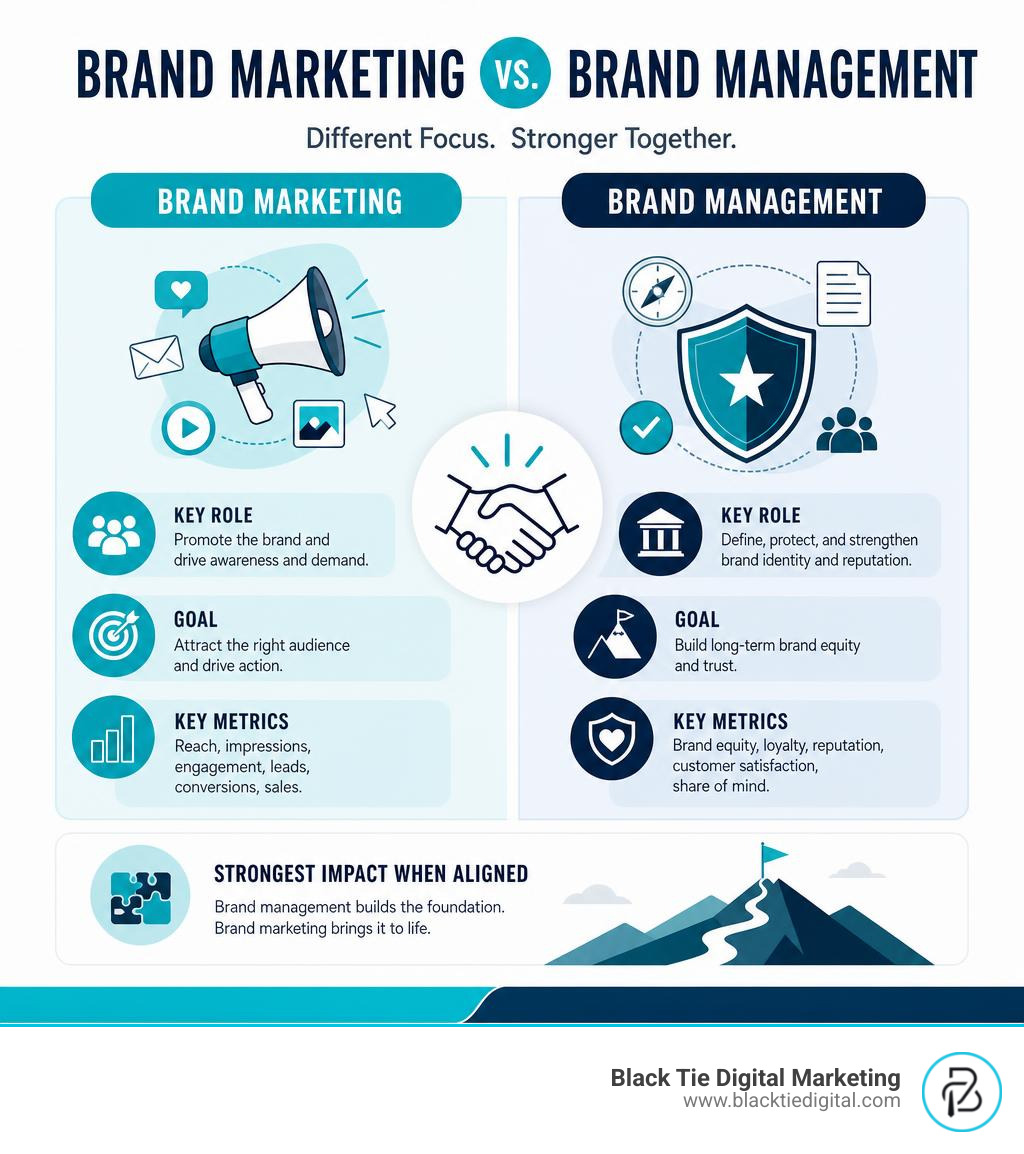
- Brand Management: Defining and maintaining your brand identity, values, and consistency over time
- Brand Marketing: Running campaigns that promote your brand and drive awareness or sales
- Brand Equity: The perceived value customers attach to your brand versus a competitor
- Brand Loyalty: Repeat customers who choose you over others because they trust you
- Brand Reputation: How the public sees your brand based on experience, reviews, and communication
Think of brand management as the foundation and brand marketing as what you build on top of it. Without a solid foundation, your campaigns, ads, and content will never reach their full potential.
This matters more than most business owners realize. According to recent data, 88% of consumers say authenticity is important when deciding which brands they support. And 46% of consumers say they cannot tell the difference between most brands’ digital experiences. That gap is where strong brand management wins.
Back in 1931, Procter and Gamble invented brand management to create a single point of accountability for their brands. Nearly 100 years later, the discipline is more critical than ever, especially as digital channels, AI, and shifting consumer behavior make it harder to stay consistent and relevant.
I’m Scott Brazdo MBA, CEO of Black Tie Digital Marketing, and with over 20 years of experience leading marketing brand management strategy for more than 500 companies, I have seen how the brands that invest in management (not just marketing) are the ones that scale. In this guide, I will walk you through everything you need to build and protect a brand that lasts.
Defining Marketing Brand Management and Its Core Principles
To manage a brand successfully, we must look beyond basic logos and color palettes. True brand management is an active, strategic discipline. It ensures that every customer interaction aligns with your core corporate values. When done correctly, it turns an abstract business identity into a tangible asset that drives commercial value.
There are several core principles that guide this process:
- Brand Consistency: Delivering the same message, tone, and visual identity across every channel. Whether a customer visits your office in Melbourne, Florida, or views your social media page, the experience must feel identical.
- Brand Recognition: Enabling consumers to instantly identify your business through visual or auditory cues.
- Brand Protection: Safeguarding your intellectual property, trademarking your assets, and actively defending your market position against imitators.
- Brand Reputation: Monitoring how the public perceives your business and taking proactive steps to maintain goodwill.
In the digital era, reputation is fragile. Research shows that 88% of people consider online reviews an important part of their buying decisions. This means that customer feedback, digital reviews, and social conversations are central to your survival. At Black Tie Digital Marketing, we always remind our partners that Brand Perception is Everything. If the market perceives your brand as unreliable, no amount of clever advertising can save your sales pipeline.
The Difference Between Brand Marketing and Marketing Brand Management
While the terms are often used interchangeably, brand marketing and brand management serve different purposes.
Brand marketing focuses on outbound activities. It is campaign driven and aims to capture immediate attention, generate leads, and drive short term sales. A brand marketer might focus on running social media ads, launching email newsletters, or managing search engine optimization campaigns to attract new customers.
In contrast, brand management focuses on long term equity. It is the architectural framework that dictates how those campaigns should look, feel, and speak. Brand managers define and document the brand guidelines. They establish the voice, values, and visual rules that the marketing team uses to build campaigns.
To explore how these elements form your corporate identity, read our guide on What Does Your Business Identity Say About You?. Brand management builds the internal value of the business, while marketing communicates that value to the outside world.
Essential Skills for Success in Marketing Brand Management
Managing a brand requires a unique blend of creative intuition and analytical rigor. Successful brand managers must act as total business owners, balancing creative asset development with strict financial oversight.
Key skills required for this field include:
- Analytical Skills: You must be comfortable diving into consumer data, tracking market trends, and analyzing campaign metrics to measure brand health.
- Project Management: Brand managers coordinate with design teams, copywriters, legal departments, and external agencies to bring brand assets to life.
- Financial Acumen: You must manage budgets, calculate the return on investment of brand campaigns, and understand how brand strength impacts pricing power.
For those looking to master these concepts, the Strategic Brand Management Textbook offers a comprehensive look at how modern organizations build and measure brand equity.
Building and Measuring Brand Equity Over Time
Brand equity is the premium value that your business enjoys simply because it is recognizable and trusted. When you have high brand equity, you can charge premium prices, spend less on customer acquisition, and survive competitive threats more easily.
To understand how this value is created, we look to the brand value chain. This framework shows that equity begins with marketing program investments, which influence customer mindsets. This mindset shift then drives market performance, which ultimately translates into shareholder value.
To assess where you stand, we recommend conducting a brand audit at least once every quarter. This audit should analyze your digital analytics, customer reviews, and competitive positioning. If you are just starting this journey, Developing a Brand is the First Step to a Great Business. You cannot measure or grow equity until you have clearly defined what your brand stands for.
Designing Architecture and Brand Extensions
As your business grows, you will likely introduce new products, services, or sub brands. This is where brand architecture decisions become critical. Brand architecture is the organizational structure that defines how your different brands relate to one another.
There are three primary models:
- The Branded House: Using a single master brand across all offerings (for example, Google and Google Maps).
- The House of Brands: Managing a portfolio of independent, distinct brands that do not openly connect to the parent company (for example, Procter and Gamble owning Tide and Pampers).
- Endorsed Brands: Individual brands that are supported by the parent brand (for example, Courtyard by Marriott).
When launching new products, companies often use brand extensions to leverage existing equity. For example, a trusted local service provider might extend their brand into a new geographic market or service line. While this can lower advertising costs, it also carries the risk of brand dilution if the new offering fails to meet expectations. At Black Tie Digital Marketing, we help clients map out this structure using a custom approach. You can learn more about our philosophy by reading Why We Call It the Branding DNA Architecture.
Fostering Brand Loyalty and Customer Engagement
True brand loyalty goes beyond repeat purchases. It occurs when customers become brand advocates who actively recommend your business to others.
One powerful way to build this loyalty is through secondary brand associations. This involves linking your brand to other entities, such as respected community events, charitable causes, or trusted partners. These associations transfer positive feelings from the partner entity directly to your brand.
Additionally, customer experience is the ultimate driver of loyalty. Recent data shows that 88% of customers say the experience a company provides is as important as its products or services. To build an enduring brand, you must design a customer journey that feels seamless, personal, and reliable. For a deeper look at this process, check out our article on why you should Building a Brand Include This Important Piece.
Career Paths and Roles in Brand Management

The career path in brand management is structured to develop professionals from tactical execution experts into strategic business leaders. In many organizations, brand managers are treated as mini CEOs, holding ultimate responsibility for the profit and loss of their product lines.
For professionals living in Central Florida, there are numerous opportunities to grow in this field. You can explore active listings and local requirements by searching Brand Manager Jobs in Orlando.
Junior and Mid Level Brand Management Roles
For those entering the field, the journey typically begins with junior roles that focus on execution and coordination:
- Associate Brand Manager: This junior role focuses on supporting campaign execution, analyzing market data, and coordinating creative assets. Associate brand managers work closely with cross functional teams to ensure that projects remain on schedule.
- Brand Manager: At the mid level, the brand manager takes ownership of a specific product line or brand segment. Responsibilities expand to include budget oversight, marketing strategy development, and agency management.
Senior and Executive Leadership Roles
As professionals gain experience, they transition into high level strategic leadership roles:
- Senior Brand Manager: Managing larger product portfolios, mentoring junior staff, and setting long term strategic goals.
- Director of Marketing: Overseeing multiple brand managers and ensuring that all brand strategies align with the broader corporate objectives.
- Chief Marketing Officer (CMO): Holding ultimate accountability for the corporate brand identity, marketing budget allocation, and business growth at the executive level.
Adapting Brand Strategy to Digital Transformation and AI

The rise of artificial intelligence and digital platforms has fundamentally changed how we manage brands. Today, consumers co create brand meaning through social media commentary, online reviews, and digital communities. Brand management is no longer a top down broadcast, it is a continuous conversation.
Artificial intelligence allows us to analyze this conversation in real time. Modern brand managers use AI powered tools to track brand sentiment, monitor customer reviews, and predict emerging market trends. This technology helps us understand consumer behavior at a granular level, allowing for highly personalized digital experiences.
However, technology is only useful if you have a clear understanding of your core identity. Before implementing advanced AI tools or launching complex digital campaigns, you must establish a clear foundation. We discuss the importance of this foundational work in our guide on Knowing Your Brand.
Managing Brands Across Geographic Boundaries
Expanding a brand across geographic boundaries requires a careful balance between global consistency and local adaptation. While your core values and visual identity must remain consistent, your messaging and product offerings must adapt to local customs, regulations, and consumer preferences.
For example, a business expanding from Melbourne, Florida, to international markets must research how local audiences perceive their imagery, colors, and slogans. To explore these global dynamics in detail, we recommend reading the Brand Management SAGE Publication, which offers excellent case studies on managing brands across diverse global segments.
Crisis Management and Maintaining Consistency
Every brand will eventually face a threat, whether it is a negative viral review, an economic downturn, or an aggressive competitive campaign. During these times, consistent communication is your strongest shield.
When a crisis occurs, brands must respond quickly, transparently, and in a way that aligns with their core values. This is not the time to alter your voice or abandon your principles. Instead, use the challenge as an opportunity to reinforce what you stand for.
In industries that face intense public scrutiny, such as firearms manufacturing, brand protection and clear storytelling are vital. Firearms manufacturers are often the heroes of their local economies, providing high quality jobs and supporting constitutional freedoms. For these businesses, maintaining a consistent, proud, and compliant brand narrative is essential to defending their reputation. To learn how to frame your narrative during challenging times, read our guide on how to Tell Your Brand Story.
Frequently Asked Questions About Brand Management
What is the difference between branding and brand management?
Branding is the initial creative process of building your brand identity. It includes designing your logo, choosing your color palette, and defining your mission statement.
Brand management is the ongoing daily work of maintaining and protecting that identity over time. While branding creates the asset, brand management ensures that the asset remains relevant, consistent, and valuable. To understand why custom, professional asset creation is so important to this process, read our article on 4 Reasons Custom Matters.
What does a brand manager do on a daily basis?
A brand manager’s daily responsibilities are highly diverse and cross functional. On any given day, a brand manager might:
- Analyze digital analytics to track campaign performance and consumer sentiment.
- Review creative assets to ensure they align with established brand guidelines.
- Collaborate with sales and operations teams to prepare for a new product launch.
- Manage marketing budgets and review the return on investment of advertising spend.
- Coordinate with external agency partners to optimize search engine positioning.
How do companies measure brand equity?
Companies measure brand equity using a combination of qualitative and quantitative metrics:
- Consumer Surveys: Tracking brand awareness, recall, and net promoter scores to understand consumer perception.
- Financial Valuation: Analyzing premium pricing power, market share, and the financial value of the brand asset.
- Digital Metrics: Monitoring search volume, social media engagement, and online review sentiment.
Conclusion
Building a strong brand is not a one time project. It is a continuous, strategic effort that requires consistency, analytical insight, and deep consumer empathy. In a market where consumers demand authenticity and can easily compare digital experiences, effective brand management is the ultimate competitive advantage.
At Black Tie Digital Marketing, we specialize in helping businesses across Orlando, Melbourne, and Central Florida navigate this journey. As a full service digital marketing agency, we combine the capabilities of ten traditional vendors into one innovative partner. From custom web design and search engine optimization to comprehensive brand strategy and AI optimization, we provide the tools you need to build a brand that lasts.
Are you ready to elevate your brand and drive long term growth? Explore our Black Tie Digital Marketing Branding Services today, and let us help you build a brand that stands the test of time.
