

Why Defense Industry Marketing Demands a Different Playbook
Defense industry marketing is one of the most complex and high-stakes disciplines in all of B2B. Unlike consumer or standard business marketing, it operates inside a web of federal regulations, multi-year procurement timelines, and audiences who value trust and technical credibility above everything else.
Here is a quick snapshot of what makes defense marketing unique:
- Regulated audiences: Buyers include government procurement officers, prime contractors, and military program managers, all operating under strict acquisition rules.
- Long sales cycles: Contracts often take 18 to 36 months from first contact to award.
- Compliance requirements: Content and campaigns must navigate ITAR, EAR, and security classification rules before anything goes public.
- Multi-stakeholder decisions: Engineers, executives, congressional aides, and contracting officers all influence the final outcome.
- Trust over volume: Credibility and precision matter far more than reach or impressions.
The stakes are real. A Boston Consulting Group survey found that nearly half of defense sector marketers saw sales land up to 25% below forecast, with 60% admitting their teams lacked the digital skills the market now demands.
And the market is accelerating fast. US aerospace and defense spending on AI alone is projected to reach $5.8 billion by 2029, more than three times 2025 levels. Companies that fail to build a modern, compliant marketing engine risk being invisible exactly when procurement officers are searching for solutions.
I’m Scott Brazdo MBA, CEO of Black Tie Digital Marketing, where I’ve spent over 20 years leading rebrands and digital growth strategies for defense and aerospace clients including L3 Harris, KelTec, and B5 Systems. That direct experience in defense industry marketing shapes every strategy we build for clients in this space.

The Unique Landscape of Defense Industry Marketing
In May 2026, the landscape of the defense sector is more competitive than ever. For companies operating in hubs like Melbourne and Palm Bay, Florida, the proximity to major military installations and prime contractors creates a unique environment where digital visibility must be balanced with extreme discretion. Marketing here is not just about making noise, it is about establishing a “Commanding Narrative” that survives the scrutiny of program managers and congressional aides.
One of the primary hurdles we face in Defense Industry Marketing is the regulatory framework. International Traffic in Arms Regulations (ITAR) and Export Administration Regulations (EAR) govern how technical data is shared. A public website is essentially a global broadcast, which means any technical specification published could be considered a “deemed export.” Operations Security (OPSEC) is equally vital, ensuring that we do not inadvertently reveal sensitive mission capabilities while trying to showcase our innovation.
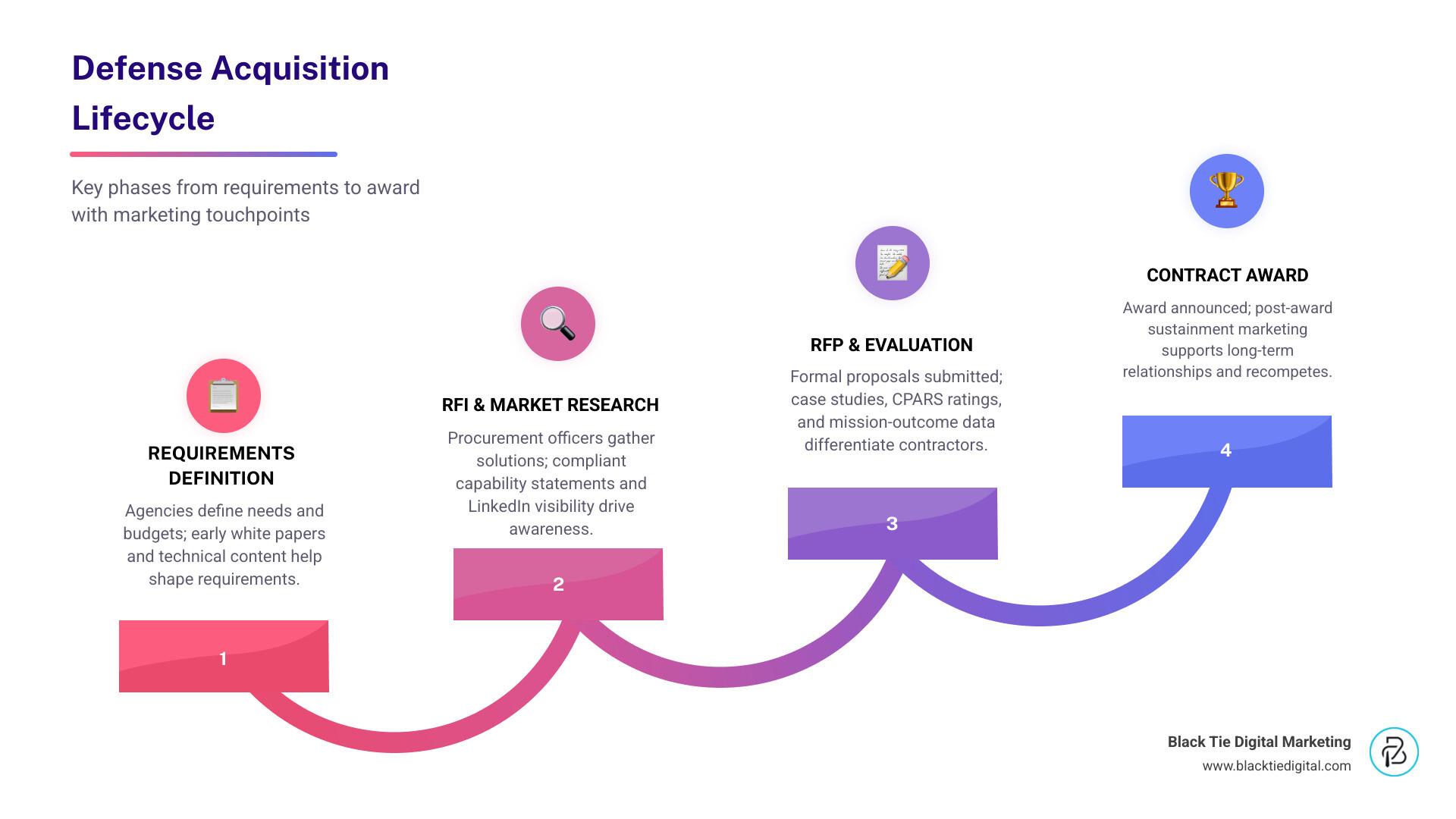
The procurement process itself is a marathon. We are often looking at sales cycles that span 18 to 36 months. During this time, your digital presence acts as a silent salesperson. When a program manager at a DoD acquisition office has a market research deadline, they often turn to search engines to shortlist vendors. If your company does not appear in those early digital searches, you might be excluded from the conversation before it even begins.
The regional impact is significant as well. Central Florida is a powerhouse for this sector, and you can see the scale of the industry by looking at the 718 Defence Marketing jobs in United States on LinkedIn or exploring the Top Palm Bay, FL Defense Companies 2026 via Built In. In this local ecosystem, your reputation is your currency, and your marketing must reflect the serious, mission-ready nature of your work.
Strategic Digital Channels and Search Visibility
While traditional handshakes and trade shows still matter, the “digital breadcrumbs” you leave online often frame the conversation before a formal briefing ever occurs. We focus on building an influence ecosystem where your brand is present exactly where decision-makers do their research.
LinkedIn has become the “town square” for the defense community. It is the primary channel for reaching government buyers and prime contractor leadership. However, effective LinkedIn strategy in this sector is not about viral videos; it is about steady thought leadership tied to national defense priorities. We have seen instances where strategic LinkedIn posts led directly to trade show inquiries and high-value project contacts.
Trade shows themselves have evolved. They are no longer isolated events but peaks in a year-long digital campaign. Pre-event and post-event digital outreach ensures that your booth is a destination for qualified leads rather than just a place for passersby to collect brochures. This integrated approach is something we have applied across various high-stakes sectors, from tactical equipment with B5 Systems to the frontier of space exploration with Moon Express.
Optimizing Defense Industry Marketing for Search and Visibility
SEO for defense is not about high-volume keywords like “cool drones.” It is about high-intent, technical queries that procurement officers use when they are in the market research phase. We target specific terms like “counter-UAS systems” or “MIL-SPEC ruggedized sensors.”
Technical SEO in this space requires a delicate touch. We implement structured data and schema markup to help search engines understand your certifications, past performance, and product categories without exposing restricted data. Our Black Tie Digital Marketing Services are designed to build these compliant “search pipelines” that drive real results. We have used these precision tactics to elevate brands like Spikes Tactical, ensuring they rank for the queries that actually drive business growth.
Leveraging AI and Agentic AI in Defense Industry Marketing
By May 2026, AI has moved from a buzzword to a fundamental part of the defense marketing stack. Agentic AI (AI that can take independent actions to achieve goals) is reshaping how we handle competitive intelligence and market trend analysis. 93% of CMOs now report clear ROI from Generative AI, citing its power for personalization and cost reduction.
In the defense sector, AI helps us analyze massive amounts of procurement data to identify “growth pockets” and upcoming RFP opportunities. It also plays a role in digital sustainment and predictive maintenance messaging, which is a massive growth area. Global commercial aftermarket MRO demand is expected to grow steadily through 2035, and marketing these capabilities requires data-driven precision.
We have integrated advanced digital strategies for clients like Haven Gear and helped engineer high-performance digital platforms for Kel Tec’s Ecommerce Gun Store Engineered for Peak Performance. The goal is always the same: use the latest technology to make the buyer’s journey as frictionless as possible while maintaining total compliance.
Content Strategies for Technical and Executive Audiences

Content in Defense Industry Marketing must serve two masters: the technical evaluator (the engineer) and the executive decision-maker (the general or CEO). If you only speak to one, you will lose the other.
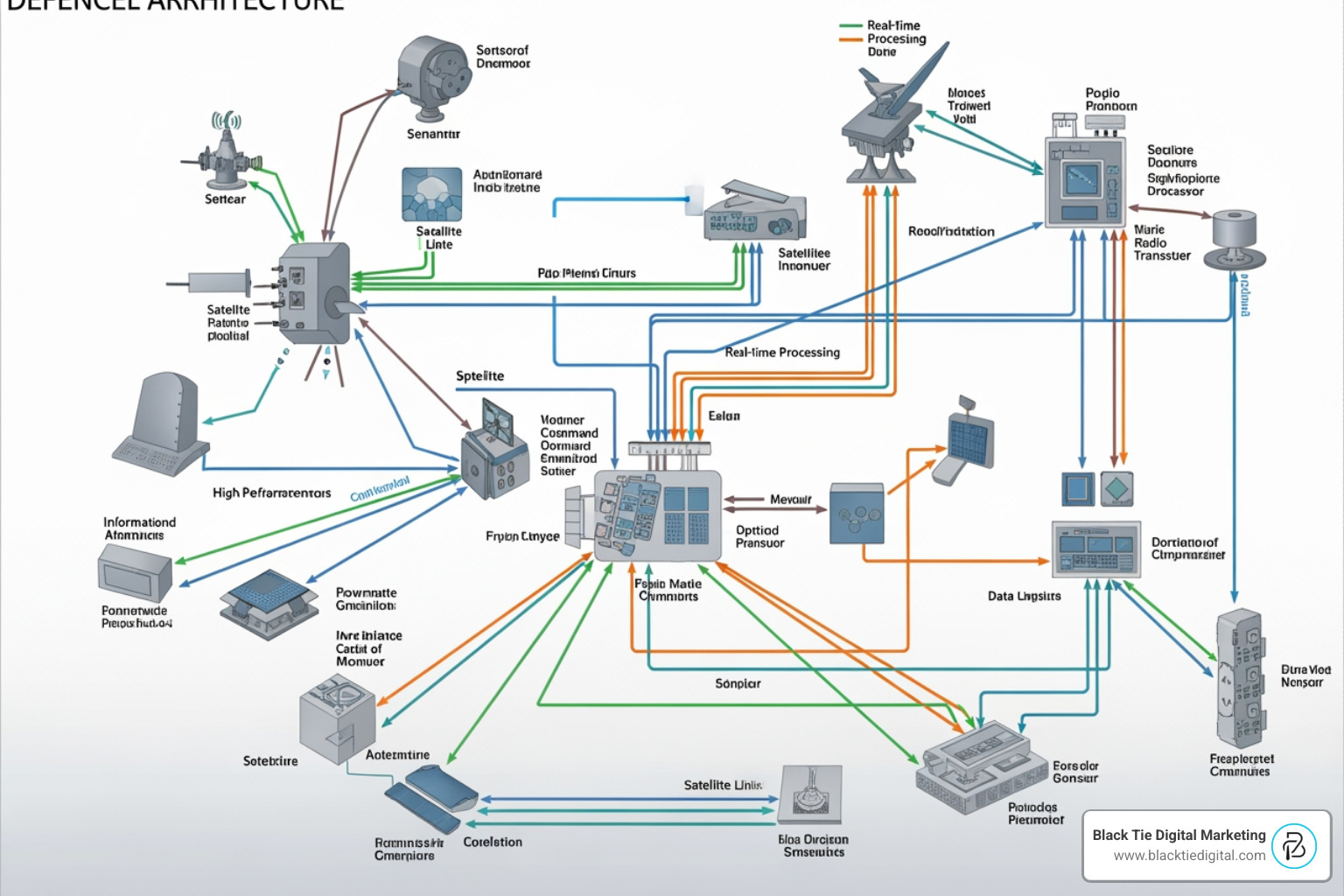
Engineers want “Tactical Proof.” They are looking for architecture diagrams, integration details, and measurable performance claims. They are skeptical of marketing jargon and want to see validated test data. On the other hand, executives look for mission impact, affordability, and schedule certainty. They want to know how your solution solves a strategic deterrence gap or reduces the logistics burden.
Effective content strategies include:
- Capability Statements: Concise, RFP-ready documents that highlight your unique value and past performance.
- White Papers: Deep dives into operational concepts (CONOPS) that position your company as a thought leader.
- Sanitized Case Studies: Highlighting successful outcomes and mission success without revealing classified specifics.
- CPARS Highlights: Using your Contractor Performance Assessment Reporting System successes to build “unshakable credibility.”
We understand the nuances of these different audiences. Whether we are working with Complete Parachute Solutions on specialized mission gear or providing a Gun Dealers: A Complete Guide to Selling Firearms Online, we tailor the message to the specific technical and regulatory requirements of the industry.
Measuring ROI and Pipeline in Multi-Year Cycles
How do you measure the success of a marketing campaign when the contract award is three years away? This is the “attribution gap” that many defense contractors struggle with. To solve this, we focus on leading indicators that show we are moving the needle with the DoD and prime contractors.
We track “micro-yeses” throughout the procurement cycle. Is your government traffic share increasing? Are you seeing more repeat visits from .mil or .gov domains to your technical pages? Is the quality of your inbound Requests for Information (RFI) improving? These are the metrics that matter.
One powerful example of operational excellence is the “two-speed capture process.” By streamlining how companies bid on different tiers of contracts, firms have unlocked up to 40 percent in savings on bidding efforts. This allows more resources to be funneled back into strategic marketing and R&D.
To help you visualize how we track progress, consider this comparison of KPIs:
| Short-Term Metrics (0-6 Months) | Long-Term Pipeline Impact (18-36 Months) |
|---|---|
| Increase in branded search lift | Growth in qualified contacts within target programs |
| LinkedIn engagement from target prime contractors | Inclusion in market research memos and RFIs |
| Downloads of technical white papers | Contract win rates and bid success |
| Trade show meeting set rates | Budget line retention and program funding |
We have applied these measurement frameworks for diverse clients, from global integrators like USSI Global to mission-driven organizations like Wins for Warriors. By focusing on the right data, we can prove that marketing is a revenue driver, not just a cost center.
Frequently Asked Questions about Defense Marketing
How do contractors balance visibility with ITAR compliance?
The key is to integrate compliance review into the editorial workflow early. Instead of treating compliance as a final “gate” that slows everything down, we treat reviewers as collaborators. We focus on “marketing-level” capability descriptions that highlight outcomes (e.g., “improved target recognition in low-light environments”) rather than controlled performance specifications (e.g., “exact sensor resolution at 10km”). This allows for steady publishing without crossing compliance lines.
What digital channels reach government procurement officers best?
LinkedIn remains the gold standard for professional engagement. However, search engines are increasingly vital for the research phase. Procurement officers and congressional aides use Google to validate claims and research new technologies. Targeted digital advertising, often geo-fenced around key locations like the Pentagon or major industry hubs in Central Florida, can also be highly effective for keeping your brand top-of-mind during critical decision windows.
How is AI reshaping defense business development in 2026?
AI is accelerating the “speed to field.” It is being used to automate the analysis of massive RFP documents, conduct competitive intelligence, and personalize outreach to prime contractors. Agentic AI is moving from back-office administrative tasks to helping teams orchestrate complex workflows across logistics, maintenance, and planning. Companies using AI effectively are seeing significant reductions in acquisition costs and improvements in lead quality.
Conclusion

Marketing in the defense industry in 2026 requires a partner who understands that the stakes are higher than just “clicks” and “likes.” It requires a team that speaks the language of mission readiness, understands the friction of ITAR compliance, and knows how to navigate the long, complex corridors of government procurement.
At Black Tie Digital Marketing, we pride ourselves on being that partner. We are a full-service agency that combines the power of ten traditional vendors into one innovative team. From Melbourne to Orlando and across Central Florida, we help defense contractors tell their stories with clarity, authority, and total compliance.
Whether you need to refine your value proposition for procurement officers, build a high-performing compliant website, or launch a targeted LinkedIn campaign that reaches the “Decider Two Hundred,” we have the experience to get you there.
If you are ready to build a marketing engine that drives real pipeline and secures your place in the future of aerospace and defense, More info about our services is just a click away. Let’s start building your commanding narrative today.